The argument itself was unremarkable.
If I tried to describe it later, I would struggle to recall the exact words that were said or even what started it. There was no dramatic escalation, no shouting, no clear winner or loser. It was one of those everyday conflicts that parents resolve dozens of times a month, the kind you assume will fade as soon as the house returns to its usual rhythm.
And for the most part, it did.
The voices lowered. The issue was addressed. Everyone moved on to the next part of the day.
At least, that’s what it looked like.
What I didn’t realize then was that the argument had ended, but the rupture had not. And the repair that mattered most didn’t happen in the moment at all. It arrived later, quietly, without ceremony, in a way I almost missed.

When “Resolved” Isn’t the Same as Repaired
I’ve learned over time that parents are very good at resolution.
We know how to stop an argument, restore order, and move things forward. We separate kids, clarify rules, name expectations, and guide everyone back into acceptable behavior. From the outside, that looks like competence. It looks like leadership.
But repair operates on a different timeline.
Repair doesn’t always happen when things are loud or urgent. It doesn’t announce itself clearly. Often, it waits until everyone feels safe enough to lower their guard.
That day, the argument ended efficiently. Too efficiently, perhaps. I remember feeling relieved that it hadn’t dragged on, relieved that I’d managed it without losing my patience.
What I didn’t notice at first was the subtle emotional distance that lingered afterward, especially with Lucy.
She wasn’t upset. She wasn’t withdrawn in any obvious way. She simply moved through the rest of the day a half-step further away than usual, polite and composed, but slightly less open.
At the time, I interpreted that as resilience.
Now I know better.
The Residue Conflict Leaves Behind
Conflict leaves residue.
Even when it’s handled calmly, even when no one crosses a clear line, it can still leave children carrying unspoken interpretations. They replay moments internally. They ask quiet questions we don’t hear.
Did I disappoint them?
Did I push too hard?
Did my feelings matter?
Those questions don’t demand answers immediately. They settle into the background, shaping how safe a child feels in the relationship.
Lucy didn’t come to me to talk about the argument. She didn’t need to. From her perspective, it was over. Talking about it again might have felt unnecessary or even risky.
And that’s where repair often waits.
Not in the conversation we expect, but in the moments when defenses are down and nothing is being asked.

The Space Between Then and Later
Days passed.
Life filled the space. School, meals, homework, routine conversations about ordinary things. The argument faded from my conscious memory, replaced by everything else that required attention.
But I noticed small things.
Lucy hesitated before asking for help.
She checked my expression more carefully before speaking.
She agreed quickly, sometimes too quickly.
None of these behaviors were alarming on their own. They would have been easy to dismiss as mood or personality.
Together, they told a story.
She was recalibrating.
And that’s when I understood that the argument had shifted something internally, even though it looked resolved externally.
Repair That Doesn’t Start With an Apology
The quiet repair didn’t begin with a conversation about the argument.
It began with presence.
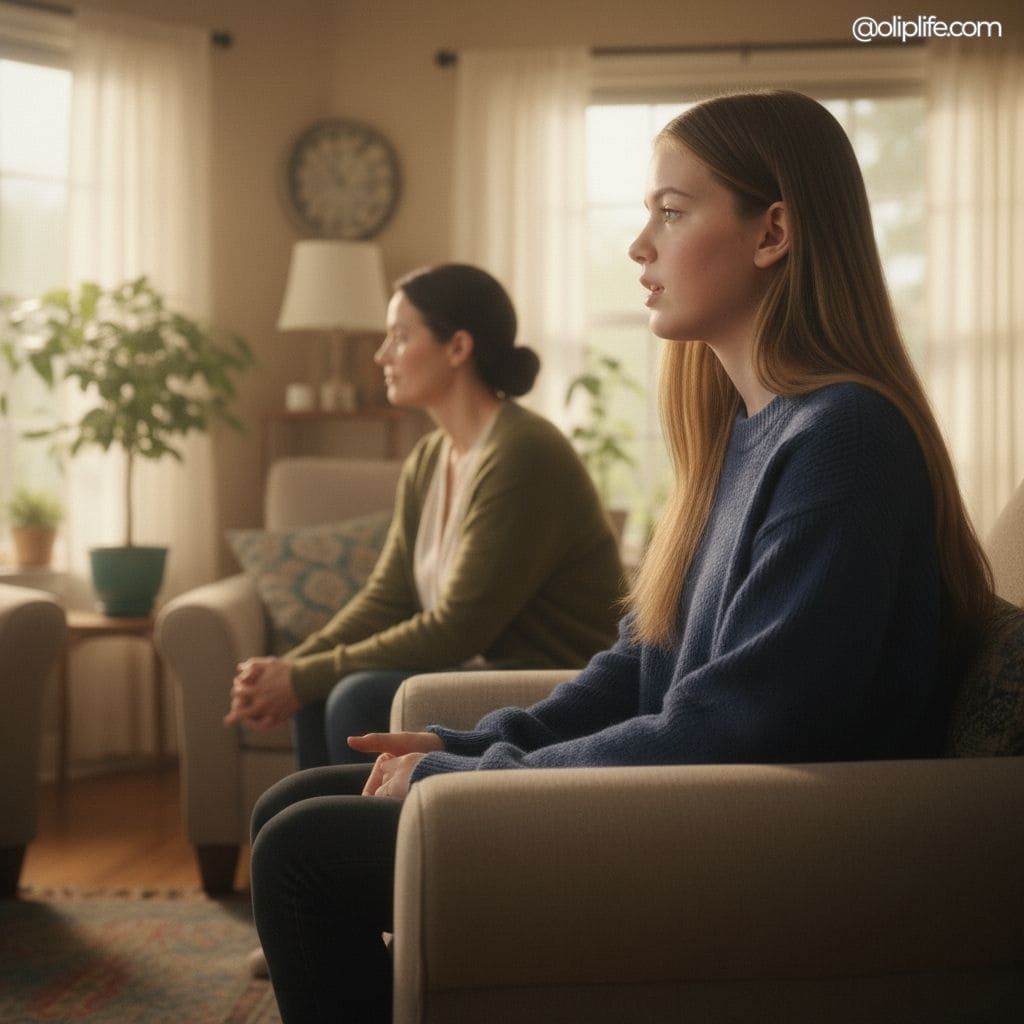
One evening, days later, Lucy sat near me while I worked, not asking for anything, just existing in the same space. She didn’t bring up the conflict. I didn’t either. We talked about unrelated things, light things, things that required no emotional risk.
That proximity mattered more than I realized at the time.
Repair doesn’t always require revisiting the moment of rupture. Sometimes it requires restoring the felt sense of connection that existed before it.
As the evening went on, I noticed Lucy relax. Her body softened. Her voice lost its careful edge. She leaned into the space between us in a way she hadn’t since the argument.
That was the repair beginning.
Why Repair Often Comes Later
Children don’t always process conflict in real time.
Adults often want immediate closure because unresolved tension makes us uncomfortable. We want reassurance that everything is okay, that the relationship is intact, that no harm has been done.
Children move differently.
They need time to observe what happens next. They watch for patterns, not promises. They look for evidence that the relationship is still safe, still predictable, still responsive.
Repair that comes later carries a different weight.
It says, “I didn’t forget.”
It says, “This still matters.”
It says, “You don’t have to ask for reconnection. It’s already here.”
That message is often more powerful than any immediate apology.
The Moment It Fully Landed
The clearest sign of repair came unexpectedly.
A few days after the argument, Lucy mentioned something she had been hesitant to bring up before. It wasn’t related to the conflict. It was personal, vulnerable, and required trust.
She offered it casually, without preamble.
That moment told me everything.
Children don’t test safety by asking directly if it exists. They test it by risking honesty.
The fact that she felt able to share again meant the repair had worked.
Not because we revisited the argument, but because the relationship had proven itself steady over time.
What I Had to Learn About My Role
For a long time, I believed repair was something parents initiated deliberately.
You apologize.
You explain.
You reassure.
Those things matter. But they are not the whole picture.
Repair also happens through consistency.
Through showing up the same way after conflict as before it.
Through warmth that doesn’t feel conditional.
Through patience that isn’t withdrawn when emotions are inconvenient.
I didn’t have to fix the argument again. I had to show Lucy that the conflict hadn’t changed how I saw her.
That message couldn’t be delivered in one sentence. It had to be lived.
The Risk of Missing Quiet Repair
It would have been easy to miss this moment entirely.
If I had been distracted, if I had mistaken Lucy’s composure for closure, if I had assumed that no further action was needed, the opportunity for repair might have passed quietly.
When repair doesn’t happen, children adapt.
They learn to be more careful.
They learn to ask less.
They learn to manage their feelings internally instead of bringing them to the relationship.
That adaptation often looks like maturity.
It isn’t.
It’s distance.
How This Changed the Way I Parent After Conflict
Since then, I pay less attention to how quickly things calm down and more attention to what happens afterward.
Do my children re-engage naturally?
Do they return to baseline trust?
Do they feel comfortable being themselves again?
If not, I don’t rush to reopen the conflict. I focus on rebuilding connection quietly.
Time together.
Shared routines.
Unpressured presence.
Repair doesn’t always need words. Sometimes it needs reliability.
What I Know Now
The quiet repair that happened long after the argument ended taught me something I wish I had learned sooner.
Resolution is not the same as repair.
Silence is not the same as peace.
And moving on is not the same as reconnecting.
Children remember less about how an argument ends and more about how the relationship feels afterward.
Final Thoughts
Not all repair is immediate. Not all repair is verbal. And not all repair announces itself clearly.
Some of the most important repairs happen later, in moments that look ordinary, in interactions that feel unremarkable, in the steady return of trust rather than the dramatic declaration of forgiveness.
When parents learn to watch for those moments and protect them, they give their children something enduring.
The knowledge that even when conflict passes quietly, connection doesn’t disappear.
It waits.
And when it’s ready, it finds its way back in.