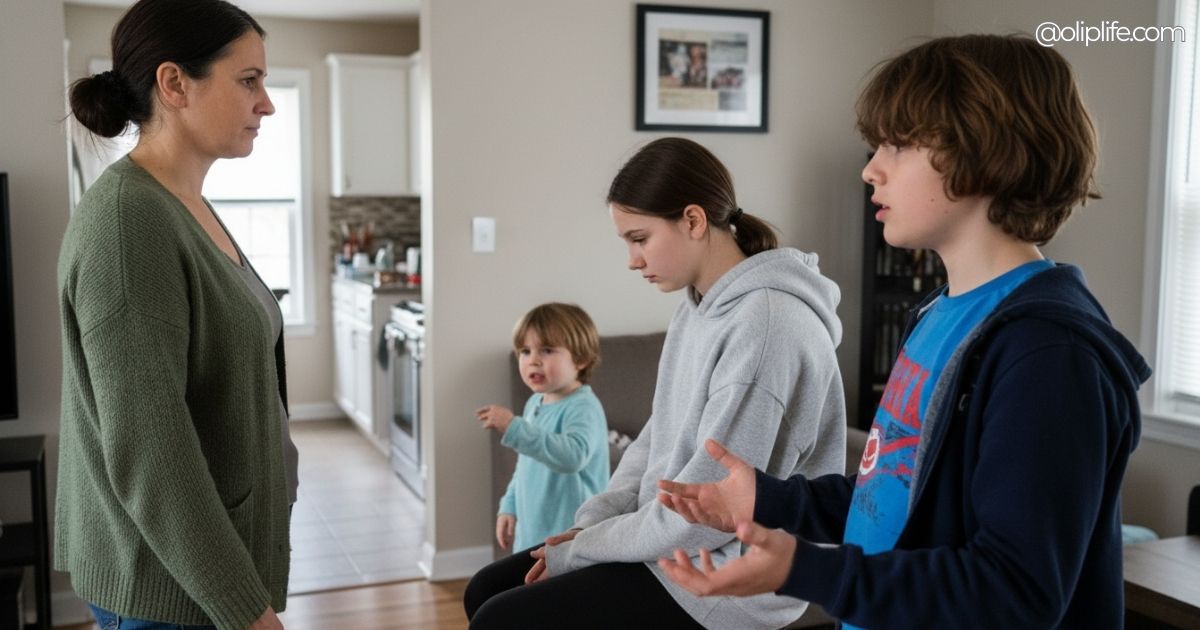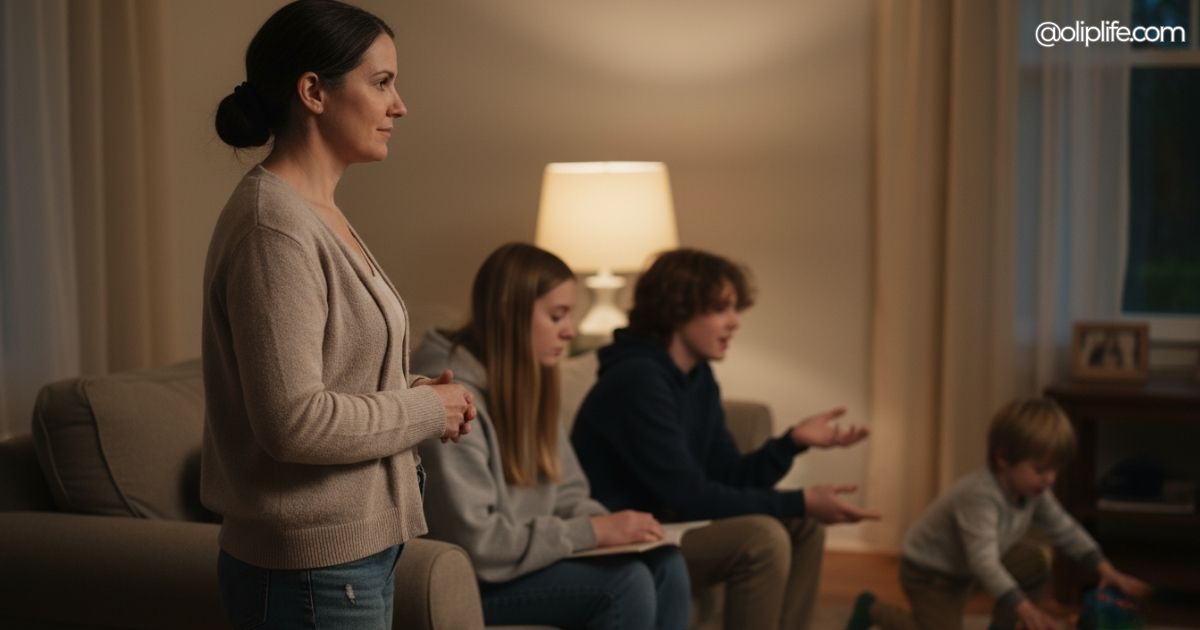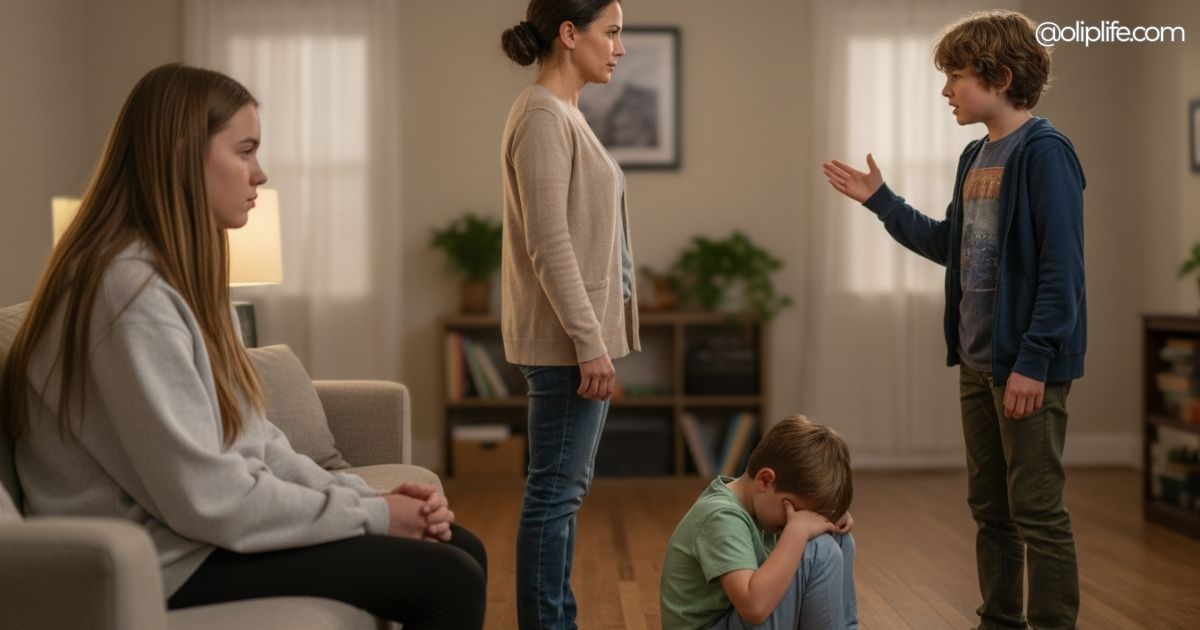
Disappointment doesn’t usually arrive with drama.
In our family, it tends to slip in quietly, disguised as a canceled plan, a missed opportunity, a promise that couldn’t be kept in the way it was imagined. It shows up in small sighs, in questions that trail off halfway through, in the subtle shift of mood that follows the realization that something hoped for isn’t going to happen after all.
For a long time, I treated those moments as obstacles to get past as quickly as possible. I focused on moving forward, reframing, distracting, offering solutions before disappointment had a chance to settle in. I believed I was helping by preventing it from taking up too much space.
What I didn’t understand then was that disappointment doesn’t disappear when it’s rushed. It goes underground. And over time, the way a family responds to disappointment shapes far more than a child’s reaction in the moment. It shapes how they interpret loss, manage expectations, and relate to themselves and others for years to come.

Disappointment as a Shared Experience
In families, disappointment is rarely an individual event.
One person’s letdown ripples outward, changing the emotional weather of the entire household. A child’s crushed excitement affects the parent who had hoped to provide joy. A parent’s unfulfilled plan affects children who were counting on stability or predictability. Even when the disappointment belongs to one person, everyone feels its presence.
What matters most in those moments is not whether disappointment occurs, but how it is held.
Is it acknowledged or minimized?
Is it shared or isolated?
Is it allowed to exist, or quickly reshaped into something more acceptable?
Those responses accumulate into a family pattern, one that quietly teaches children what to do with unmet expectations.
The Temptation to Fix Disappointment
Parents are often uncomfortable with disappointment, not because it’s unbearable, but because it triggers a sense of responsibility.
We feel pressure to make things right, to restore happiness, to prove that everything will be okay. That pressure can lead us to fix, distract, or reframe too quickly, sometimes before a child has even named what they’re feeling.
In the moment, this can look kind.
In the long term, it can send a subtle message: disappointment is something to move past quickly, not something to sit with or understand.
Children who grow up in that environment may learn to override their own feelings in order to maintain harmony, believing that disappointment is an inconvenience rather than a legitimate emotional experience.

When Disappointment Is Minimized
In families where disappointment is routinely minimized, children often learn to downplay their reactions.
They hear phrases like “It’s not that big of a deal” or “At least you still have…” offered with good intentions, but those phrases can unintentionally communicate that certain feelings are unwelcome or excessive.
Over time, children may stop sharing disappointment altogether. They learn to process it alone, or not at all. They may appear resilient on the surface while carrying unresolved feelings underneath, unsure where to place them.
The long-term effect is not strength.
It’s emotional distance.
When Disappointment Becomes a Personal Failure
In some families, disappointment is framed as something that should have been avoided through better effort, better planning, or better behavior.
This can teach children that disappointment is a sign they did something wrong, that unmet expectations reflect personal inadequacy rather than circumstance. When this belief takes hold, disappointment becomes tangled with shame.
Children raised in this environment may grow into adults who struggle with perfectionism, who interpret setbacks as proof of failure rather than part of life’s natural unpredictability.
They don’t just fear disappointment.
They fear what it says about them.
When Disappointment Is Shared and Named
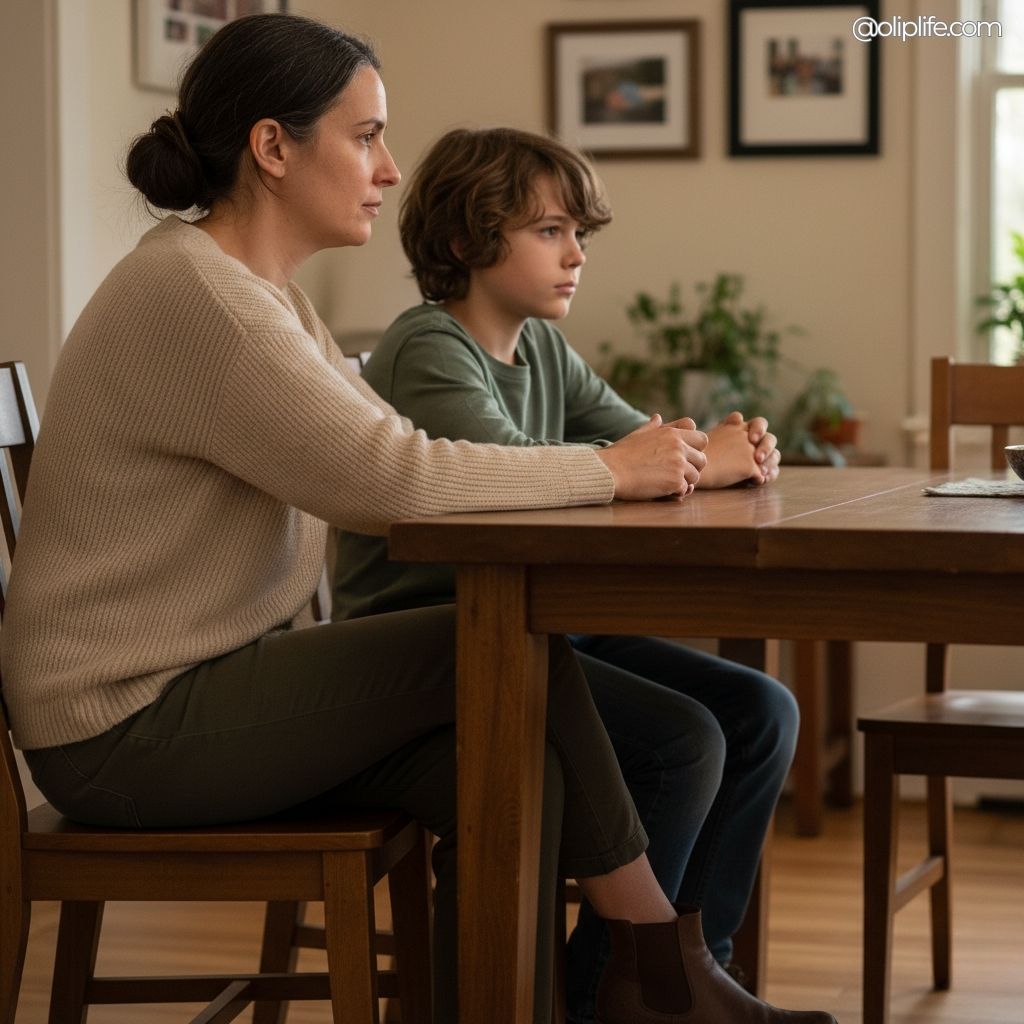
In families where disappointment is acknowledged openly, something different happens.
Instead of rushing past it, parents name it. They reflect it back without judgment. They allow space for sadness, frustration, or grief without immediately trying to change the outcome or the feeling.
This doesn’t mean dwelling endlessly on what went wrong.
It means allowing disappointment to be part of the story.
Children in these families learn that disappointment is survivable, that it doesn’t threaten connection, and that it doesn’t need to be hidden in order to move forward.
The Role of Modeling in Disappointment
Children learn how to handle disappointment not through instruction, but through observation.
They watch how parents respond to their own letdowns. They notice whether adults blame themselves, others, or circumstances. They observe whether disappointment leads to withdrawal, anger, problem-solving, or reflection.
When parents model healthy responses to disappointment, acknowledging it without becoming consumed by it, children internalize those patterns.
They learn that disappointment can be held alongside hope, that it doesn’t require emotional collapse or emotional avoidance.
How Disappointment Shapes Expectations
The way disappointment is handled in childhood directly influences how expectations are formed later in life.
Children who are allowed to experience disappointment openly tend to develop flexible expectations. They can hope without clinging, plan without rigid attachment to outcomes. They understand that disappointment is a possibility, not a catastrophe.
Children who are shielded from disappointment or taught to suppress it may struggle with expectation management as adults. They may either avoid hoping altogether or attach so tightly to outcomes that disappointment feels devastating when it arrives.
Neither extreme offers much freedom.

Disappointment and Emotional Trust
One of the most lasting effects of how families handle disappointment is its impact on emotional trust.
When children know that their disappointment will be met with presence rather than dismissal, they are more likely to bring future struggles into the open. They trust that difficult emotions won’t overwhelm the relationship or lead to correction.
That trust extends beyond disappointment.
It becomes the foundation for honest communication about fear, loss, and uncertainty later in life.
What Disappointment Teaches About Resilience
Resilience isn’t built by avoiding disappointment.
It’s built by moving through it.
Families that allow disappointment to be fully experienced teach children that emotional discomfort is temporary and manageable. They show that sadness and frustration don’t require immediate solutions in order to pass.
This kind of resilience is quiet but durable. It doesn’t rely on optimism alone. It rests on the confidence that feelings can be tolerated and understood without urgency.
The Accumulation Effect Over Time
The long-term effects of how a family handles disappointment are rarely visible in single moments.
They emerge gradually, through accumulation.
Each response adds another layer to a child’s understanding of how the world works, how relationships respond to pain, and how emotions are integrated into daily life. Over years, those layers solidify into beliefs and habits that shape adulthood.
A child who grows up feeling supported through disappointment carries that support internally long after the family home changes.
What We Learned as a Family
In our own family, learning to handle disappointment differently required slowing down.
We had to resist the urge to fix, to reframe, to distract. We had to allow ourselves to feel the discomfort of watching disappointment unfold without immediately intervening. We had to trust that presence was enough.
That trust didn’t come easily.
But over time, we noticed a shift.
Our children became more willing to name disappointment early, before it hardened into resentment or withdrawal. They recovered more naturally, without needing to be pushed forward. They learned to hold hope and realism at the same time.
What I Hold Onto Now
I no longer see disappointment as a problem to solve.
I see it as a moment of connection.
How we respond in those moments tells our children whether emotions are welcome, whether relationships can hold difficulty, and whether unmet expectations are something to hide or something to share.
Those lessons last far longer than the disappointment itself.
Final Thoughts
The long-term effects of how a family handles disappointment together reach far beyond childhood.
They shape how adults approach loss, how they manage expectations, and how they trust others with their vulnerability. Families don’t need to eliminate disappointment to protect their children.
They need to show them how to live with it.
When disappointment is met with acknowledgment, patience, and shared understanding, it becomes less about what was lost and more about what was learned. Children carry that lesson forward, not as a strategy, but as an internal assurance.
That even when things don’t go as hoped, they are not alone.
And that, in the end, is what makes disappointment something we can survive together.