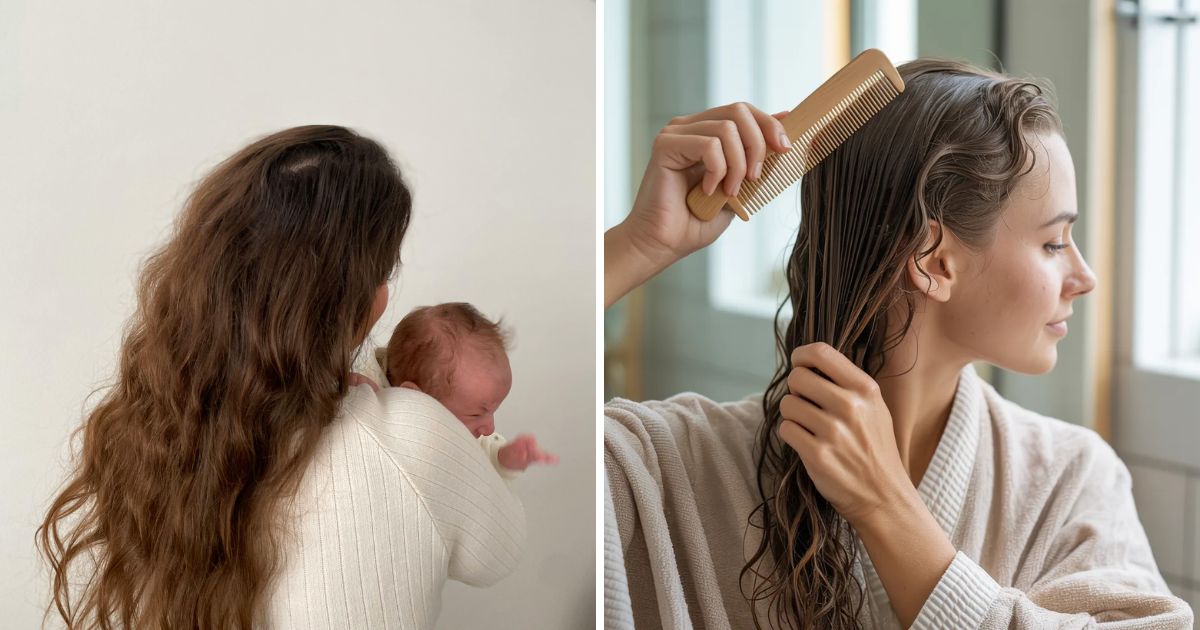
Postpartum Hair Care can feel overwhelming. Noticing more hair in the shower after baby? Most shedding is temporary, and gentle care can support healthier-looking hair.
Many new mothers feel alarmed when hair starts falling out in noticeable amounts a few months after delivery. It can seem sudden and dramatic. However, in most cases, this shedding is a normal response to hormonal shifts.
Understanding what is happening reduces panic. Supporting your hair gently reduces further stress on it. This guide explains what is normal, what may need attention, and how to care for your hair safely during this stage.
Why Postpartum Hair Shedding Happens
During pregnancy, higher estrogen levels keep hair in the growth phase longer than usual. As a result, many women experience thicker, fuller hair.
After childbirth, hormone levels return to pre-pregnancy patterns. Hair that remained in the growth phase shifts into the shedding phase at the same time.
According to the American Academy of Dermatology, postpartum hair shedding typically begins around 2–4 months after delivery and may last several months.
Although it feels excessive, this process is usually temporary and part of the natural hair growth cycle.
What Is Considered Normal?
It is common to notice:
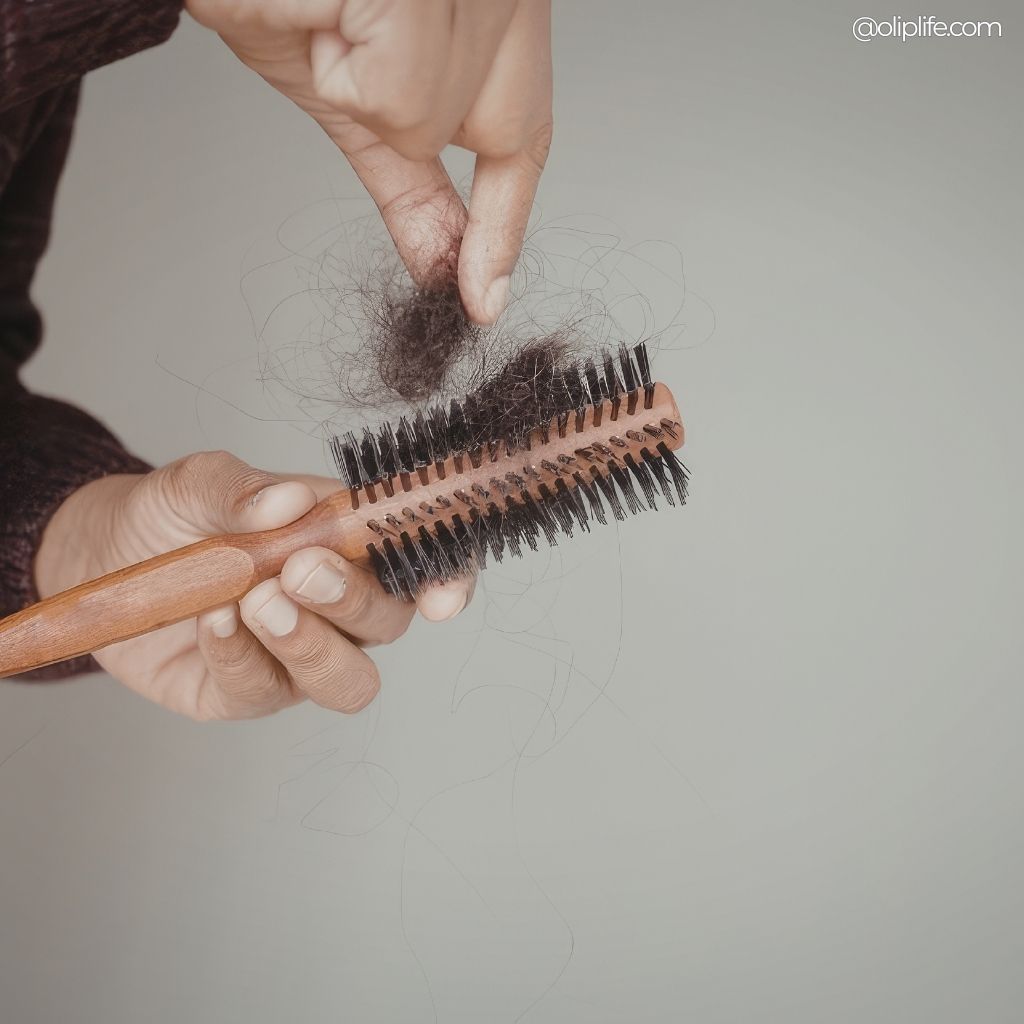
- Increased hair in the shower drain
- More strands on your brush
- Visible thinning around the hairline
On average, people lose 50–100 hairs daily. During postpartum shedding, that number may temporarily increase. In most cases, shedding slows within 6–12 months after birth.
However, if hair loss continues beyond a year, feels patchy, or is accompanied by fatigue or other symptoms, consulting a healthcare provider is important. Conditions such as thyroid imbalance or iron deficiency may require medical evaluation.
1. Gentle Handling Reduces Breakage
When shedding increases, the goal is not to stop the natural cycle but to prevent additional breakage. Rough brushing, tight hairstyles, and aggressive towel drying can cause fragile strands to snap.
Hair fibers are weakest when wet. Research in cosmetic science shows that wet hair stretches more easily and breaks under tension.
Therefore, gentle detangling and reduced friction can help maintain fullness while shedding stabilizes. Supporting hair structure matters during this phase.
2. Scalp Care Supports a Healthy Environment
While postpartum shedding is hormonally driven, maintaining a healthy scalp can improve overall hair appearance.
The scalp is living skin. Keeping it clean, hydrated, and free from heavy buildup allows hair to grow in optimal conditions. Mild shampoos and light scalp massage can promote circulation and reduce tension without irritating sensitive skin.
However, avoid harsh exfoliating treatments or aggressive scrubs during this time. Overstimulating the scalp does not speed regrowth and may increase irritation.
3. Balanced Nutrition Supports Recovery
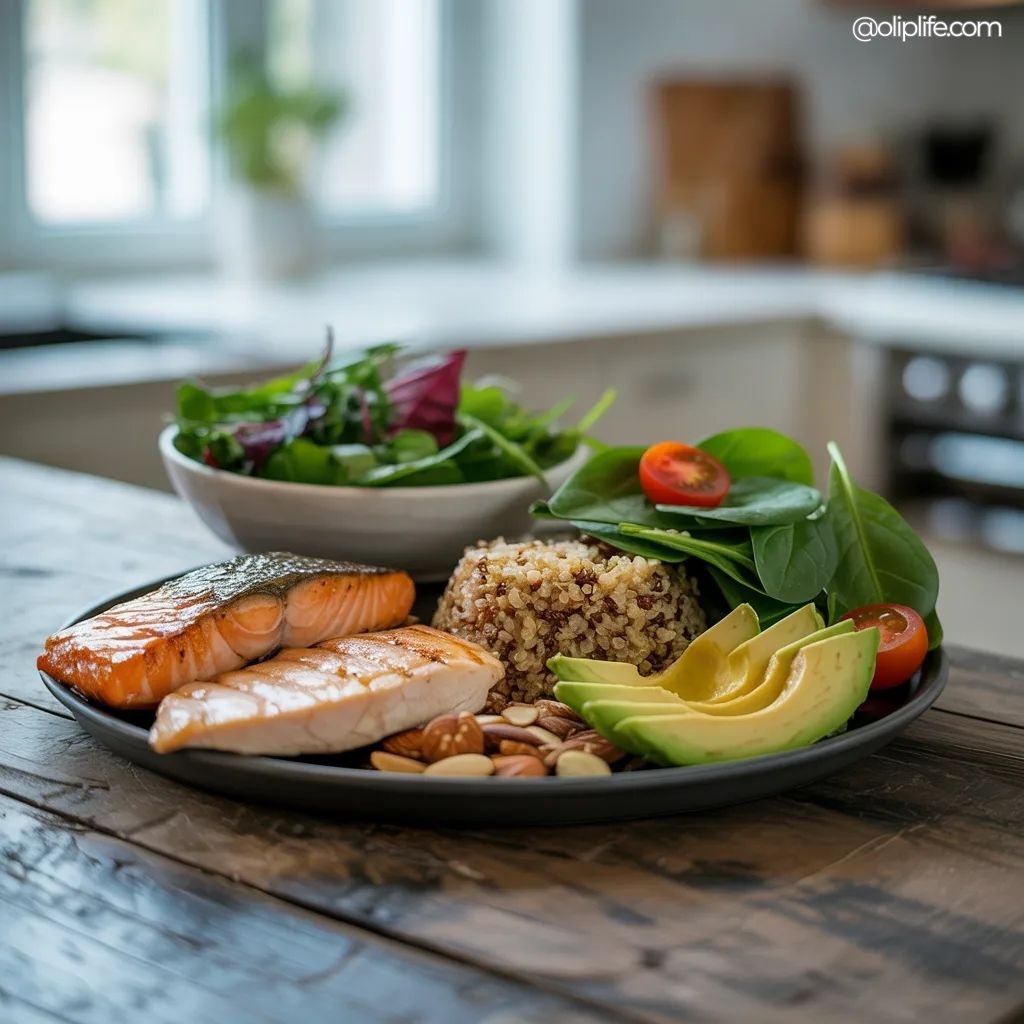
Hair is primarily made of keratin protein. After pregnancy and childbirth, the body continues recovering. Adequate protein, iron, zinc, and essential fatty acids support general hair health.
According to the National Institutes of Health, iron deficiency can contribute to hair shedding in some individuals. However, supplementation should only occur under medical supervision.
A balanced diet with lean proteins, leafy greens, whole grains, and healthy fats supports recovery more safely than self-prescribing supplements.
How to Support Your Hair Gently During Postpartum
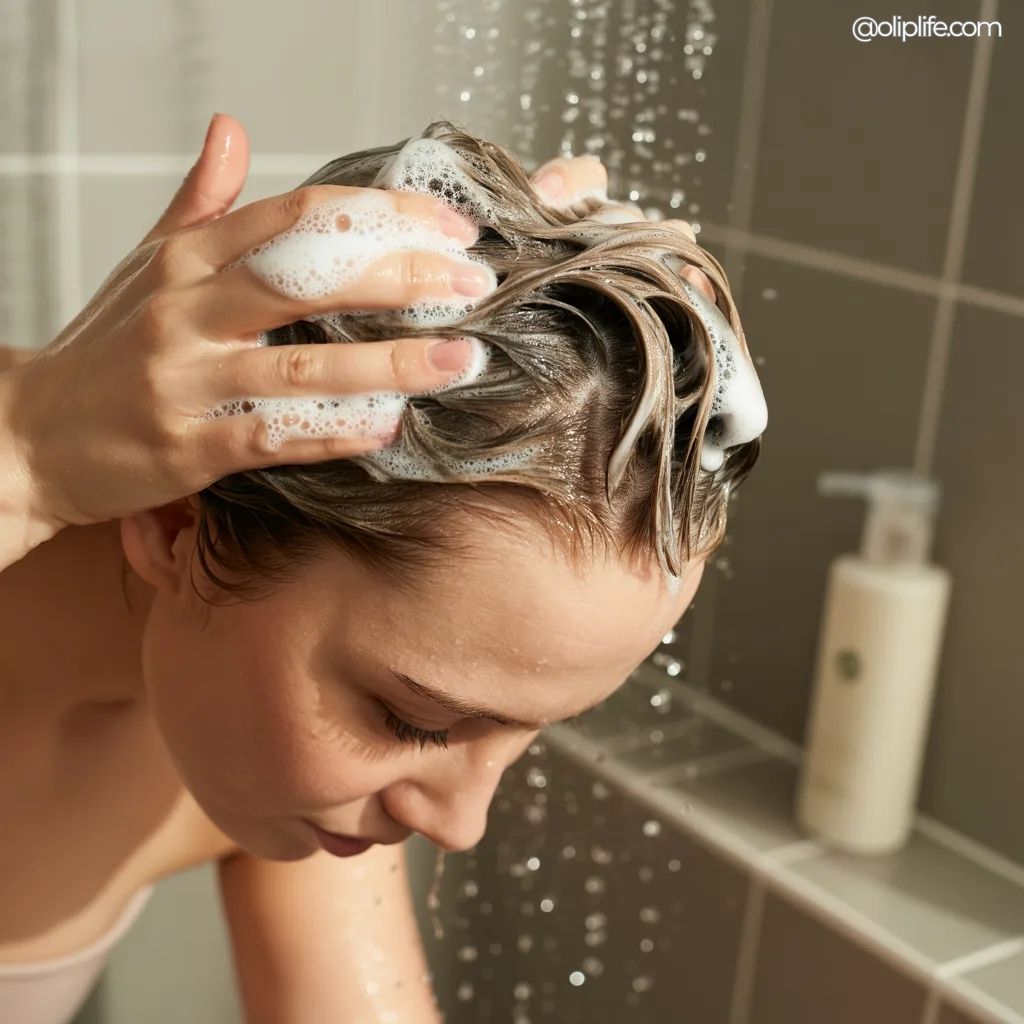
1. Switch to a Gentle Shampoo
- Choose a mild, sulfate-free cleanser.
- Wash scalp thoroughly but gently.
- Avoid aggressive scrubbing.
- Rinse completely to prevent buildup.
Overwashing can dry the scalp, but underwashing may cause buildup. Aim for balance based on your hair type.
2. Detangle With Care
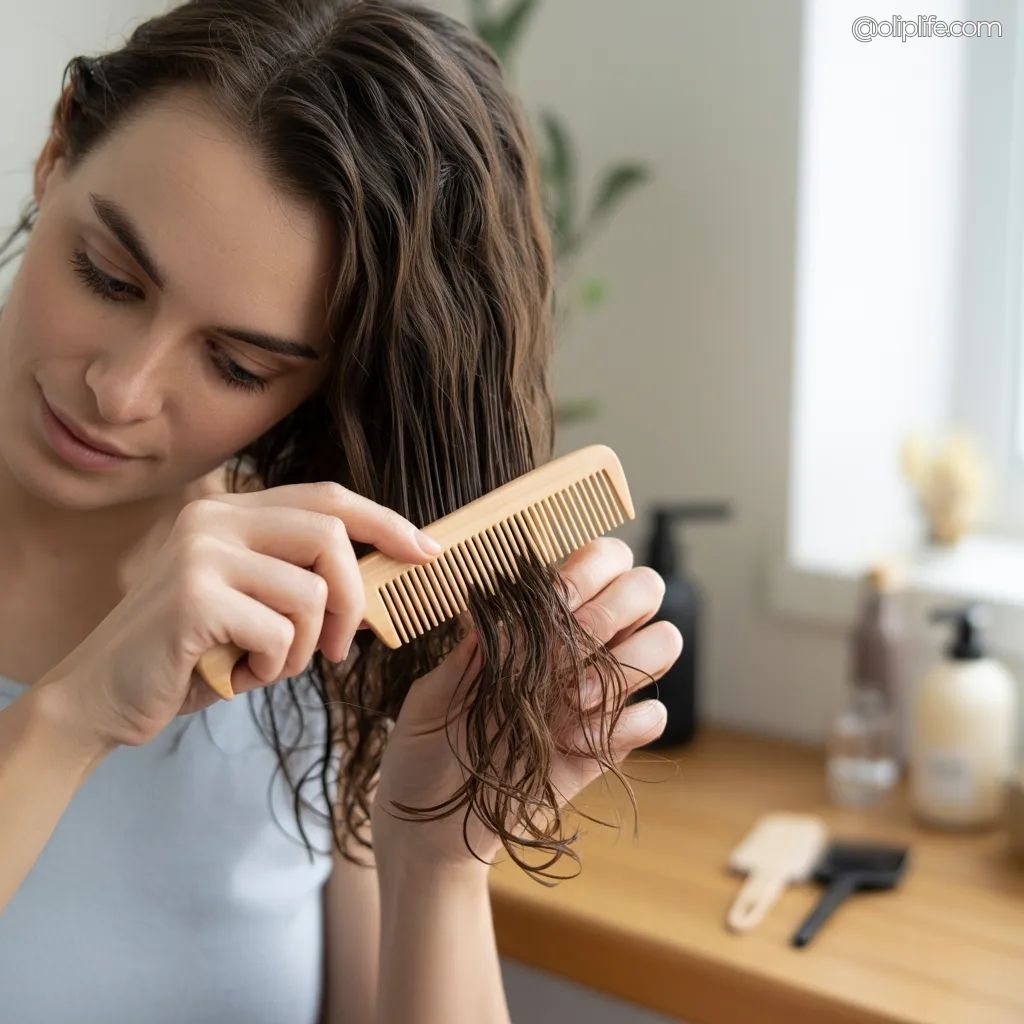
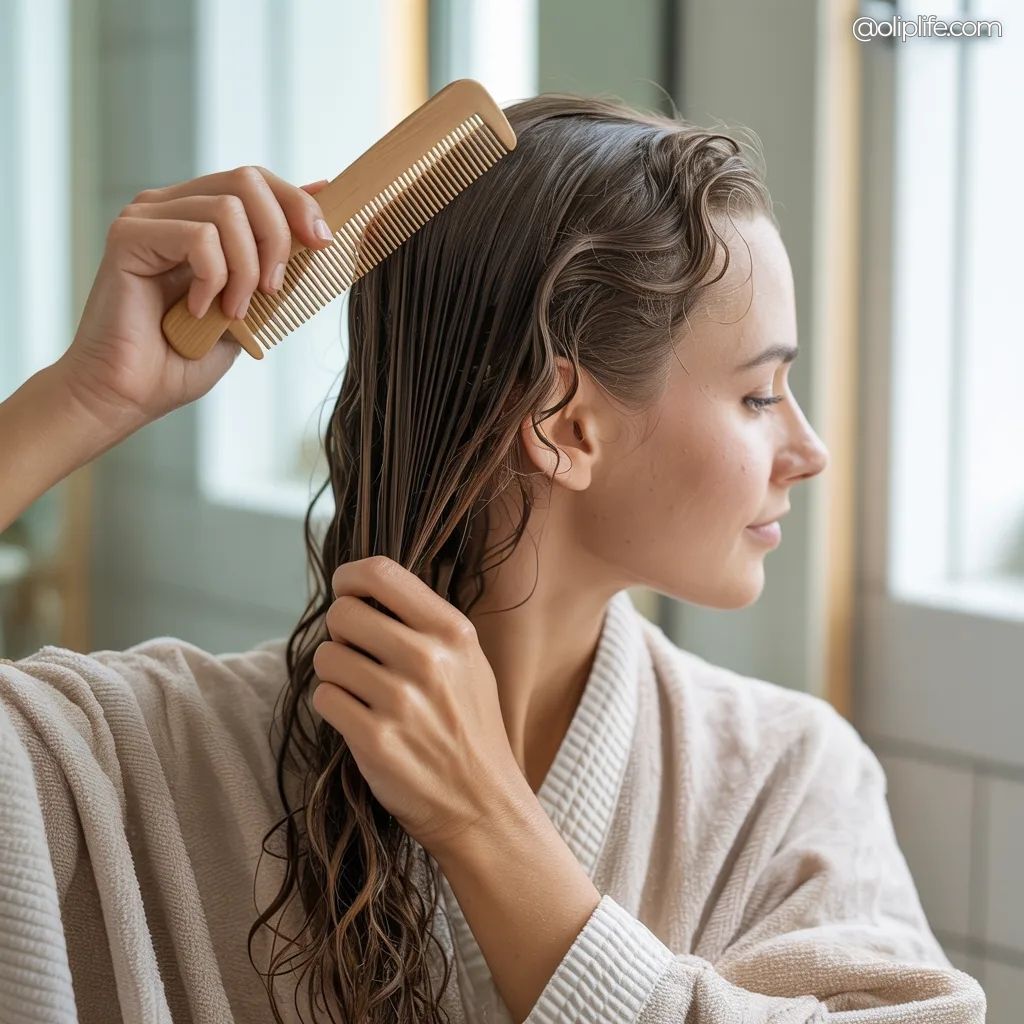
- Use a wide-tooth comb.
- Start detangling from the ends.
- Work upward slowly.
- Detangle when hair is slightly damp, not soaking wet.
Avoid tight ponytails or buns, especially around the hairline. Constant tension can lead to traction-related thinning.
3. Limit Heat Styling
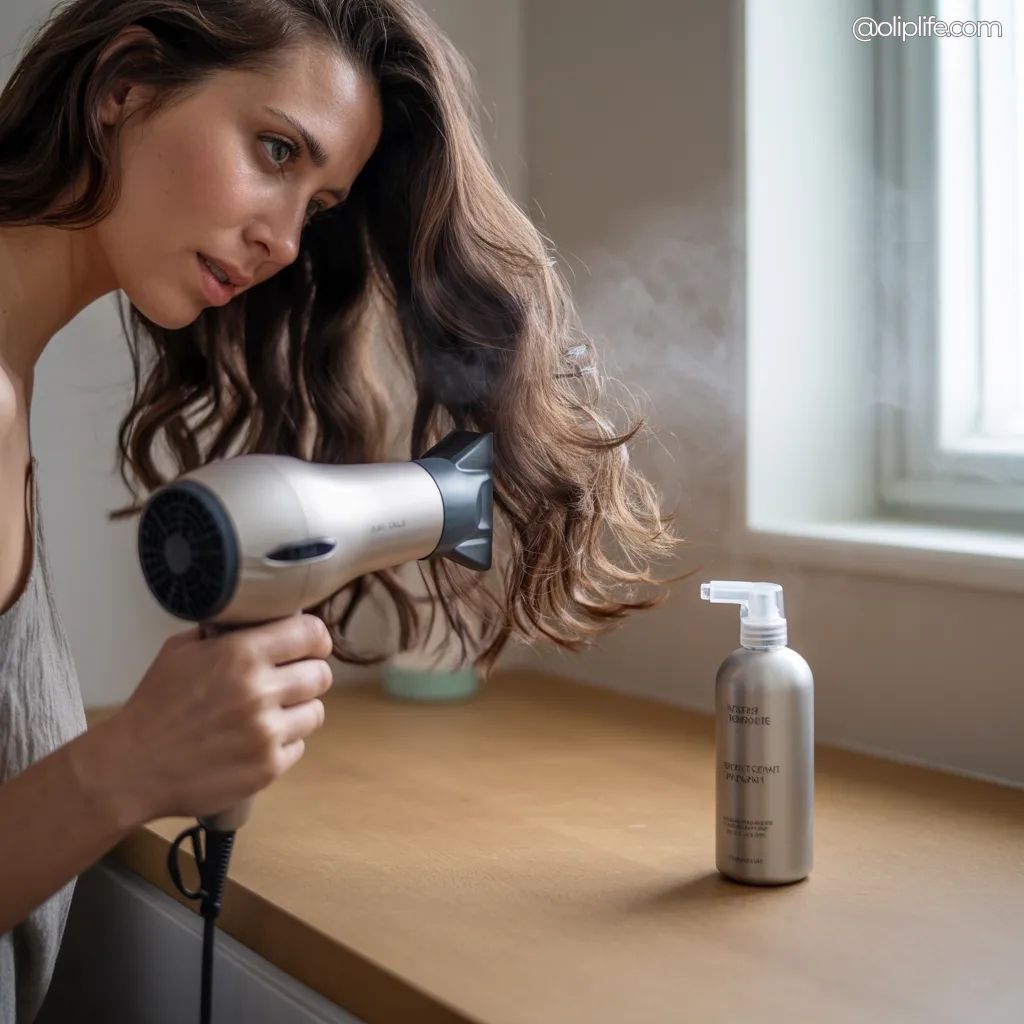
- Reduce blow-drying frequency if possible.
- Use the lowest effective heat setting.
- Apply heat protectant before styling.
- Avoid daily flat ironing.
Repeated high heat weakens the cuticle. During postpartum shedding, reducing extra stress helps maintain density.
4. Use Lightweight Conditioning
- Apply conditioner mainly to mid-lengths and ends.
- Avoid heavy masks directly on the scalp.
- Rinse thoroughly.
Heavy products may weigh hair down, making thinning appear more noticeable.
5. Consider Volume-Friendly Hairstyles
- Try soft layers for movement.
- Use side parts to create lift.
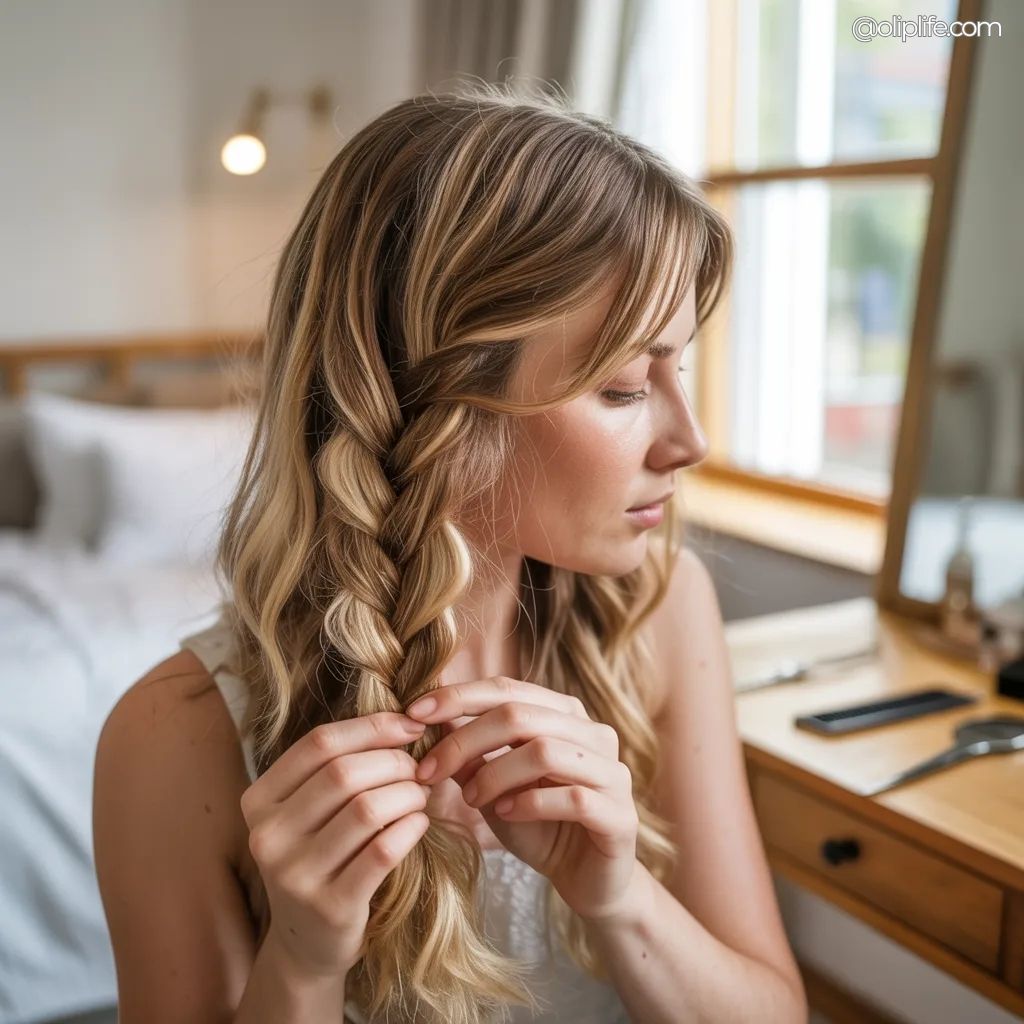
- Choose loose braids instead of tight styles.
- Avoid extensions during active shedding.
Extensions and tight styling can strain fragile strands.
Important Safety Considerations
Although postpartum shedding is usually normal, certain signs require professional attention:
- Sudden patchy hair loss
- Extreme thinning beyond one year postpartum
- Accompanying fatigue, dizziness, or brittle nails
- Severe scalp irritation
Additionally, avoid products that promise “instant regrowth” or “hormone correction.” No topical oil or mask can override hormonal shifts.
Be cautious with essential oils or aggressive scalp stimulation techniques, especially if breastfeeding, as safety data may be limited. When in doubt, consult a dermatologist or healthcare provider.
How Long Does It Take to Improve?
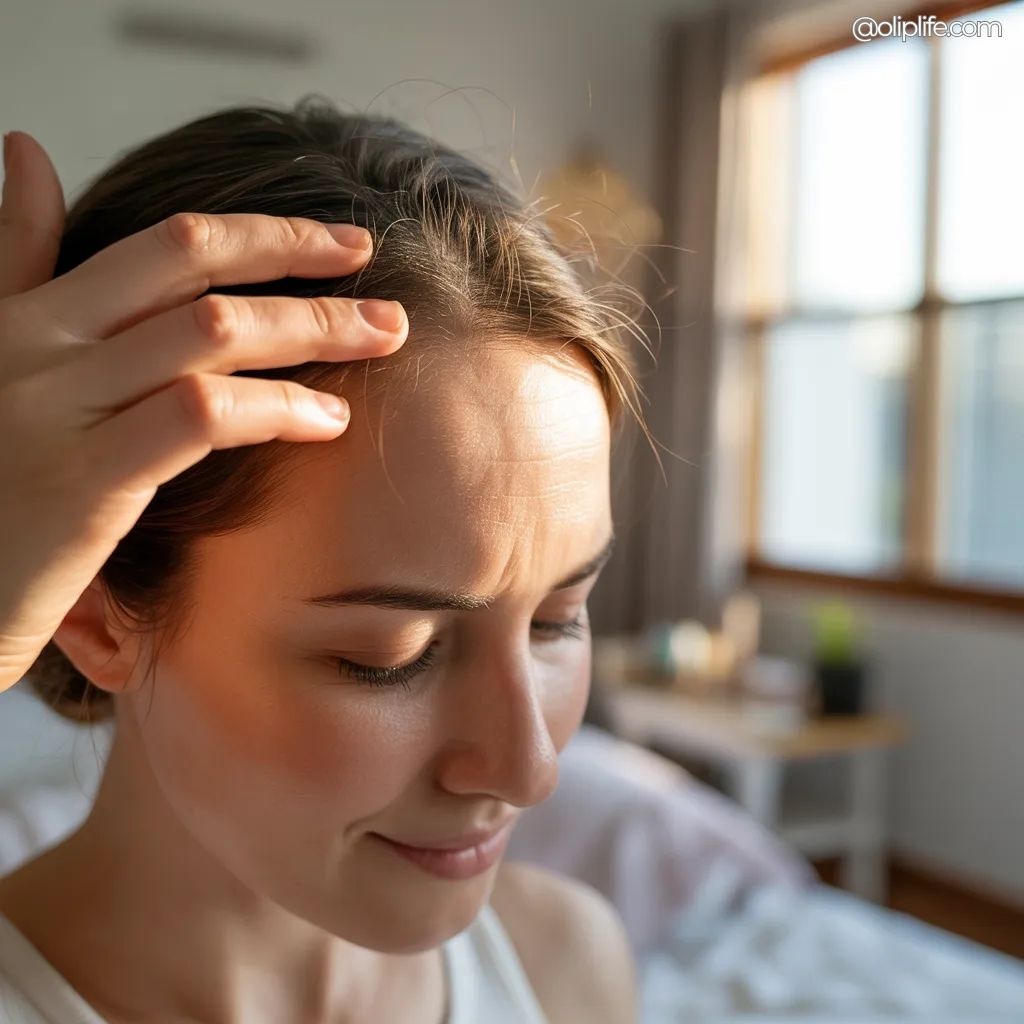
Most postpartum shedding stabilizes within several months. New baby hairs often appear along the hairline as regrowth begins.
Hair grows approximately half an inch per month on average. Visible fullness may take time. Patience and consistency are more effective than aggressive treatments.
Remember, the shedding phase reflects hormonal adjustment, not permanent damage.
Final Thoughts
Postpartum Hair Care is less about stopping shedding and more about protecting what you have while your body recalibrates.
Shedding can feel alarming. However, in most cases, it is temporary. Gentle cleansing, careful styling, balanced nutrition, and reduced heat exposure support healthier-looking hair during this transition.
Your body created life. It is allowed time to recover.