
The argument could have ended sooner if I had wanted it to.
I knew the shortcuts by heart. A firmer tone. A clear consequence. A sentence that signaled closure without resolution. I could feel the moment when the conversation tipped from uncomfortable into inefficient, when wrapping it up would have restored order and allowed the evening to move on as planned.
For years, that was my instinct. End it quickly. Restore calm. Get everyone back to baseline.
That night, though, something made me hesitate. Not because I suddenly felt patient or enlightened, but because I noticed how tense my child’s body still was even as their words softened. The volume had dropped, but nothing inside them had settled. The argument looked finished from the outside, yet emotionally, we were nowhere near done.
I realized then how often I had mistaken quiet for resolution, and how often my desire for calm had cut conversations short right when something important was trying to surface.
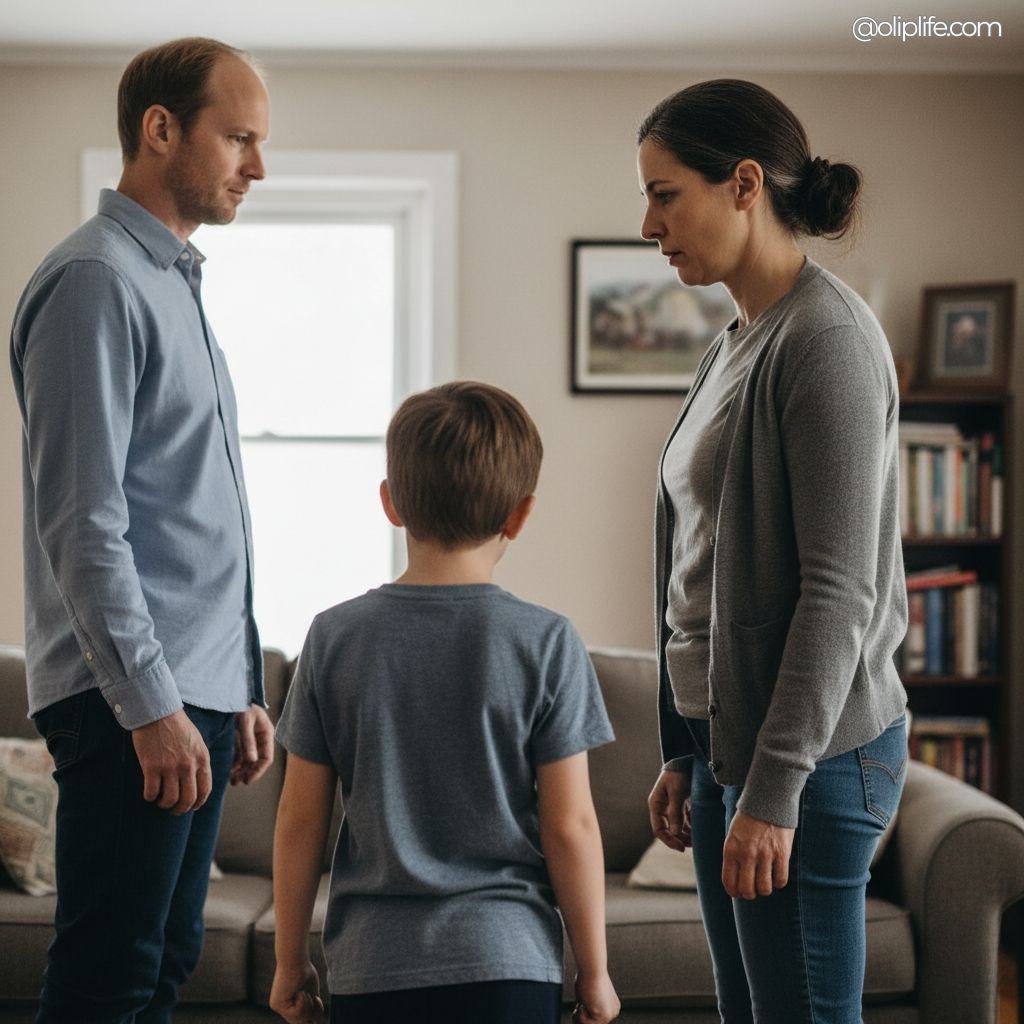
Why We Used to End Arguments Fast
Ending arguments quickly feels responsible.
It keeps things from escalating. It protects the household rhythm. It prevents hurtful words from landing. Parenting advice often reinforces this instinct, emphasizing regulation, redirection, and swift resolution as signs of effective leadership.
And to be clear, those tools matter. There are moments when arguments need to end for safety, for sanity, or simply because everyone is too dysregulated to continue.
The problem was that “ending it quickly” had become our default, not our exception.
We ended arguments not because resolution had been reached, but because discomfort had peaked. We prioritized efficiency over understanding, believing that calm was the goal rather than a byproduct of something deeper.
The Cost of Premature Endings
When arguments ended too quickly, something predictable happened afterward.
The behavior would stop, but the tension lingered. The same issue would resurface days or weeks later, often in a slightly different form. My child would comply, but not reconnect. They would move on, but with a subtle emotional distance that took time to notice.
At first, I blamed repetition on stubbornness or immaturity.
Eventually, I realized it was unfinished business.
Arguments that end before emotions are processed don’t disappear. They wait. They show up later as rigidity, withdrawal, or reactivity that feels disproportionate to the moment.
What I thought was efficiency was actually avoidance.
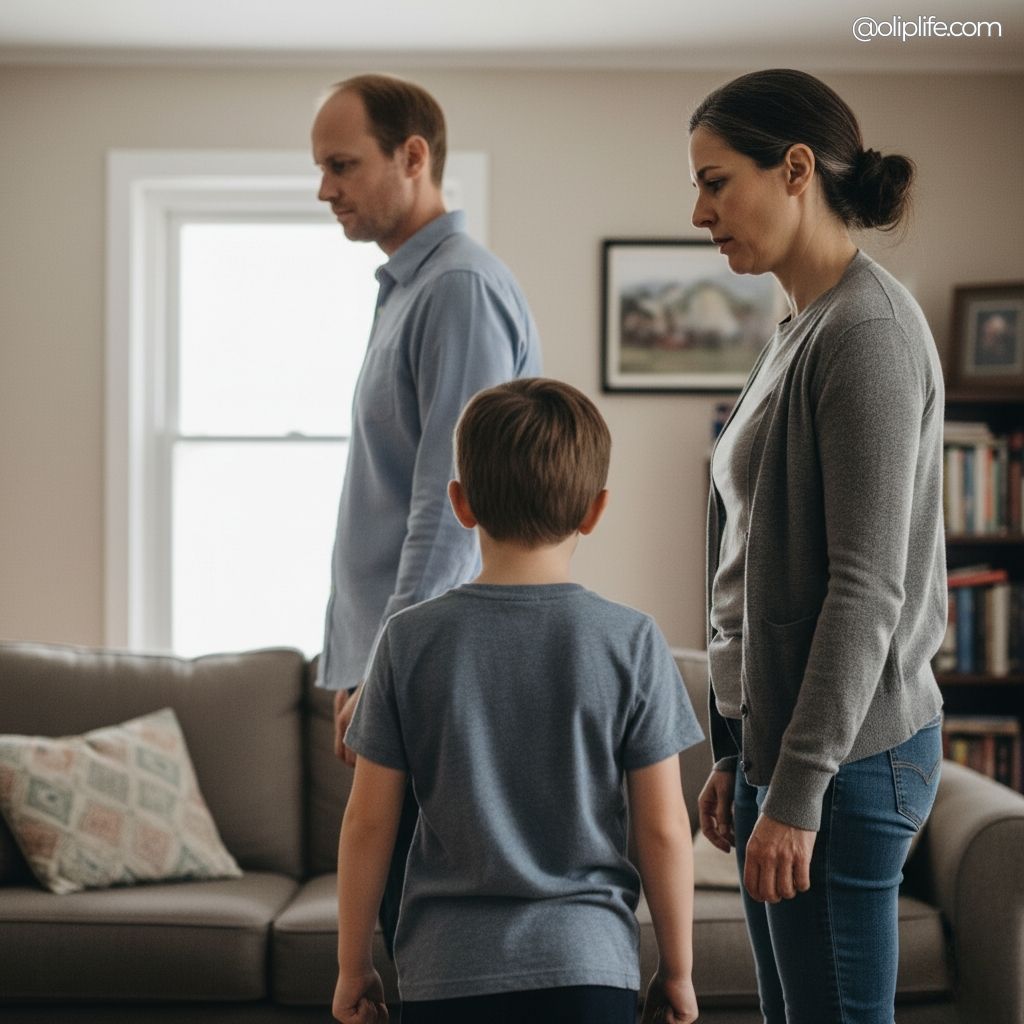
Staying Present Felt Risky
Learning to stay present during arguments didn’t feel gentle or intuitive.
It felt risky.
Staying meant allowing discomfort to linger. It meant tolerating tears, frustration, and silence without rushing to fix or finalize. It meant resisting the urge to “teach the lesson” before my child felt understood.
I worried that staying present would make arguments longer and messier. I worried it would undermine authority or blur boundaries. I worried it would encourage emotional spirals instead of preventing them.
What I didn’t realize was that presence doesn’t mean permissiveness.
It means engagement.
The Difference Between Control and Containment
The shift began when I stopped trying to control the outcome of arguments and started focusing on containing the experience.
Control aims to stop behavior.
Containment aims to hold emotion.
When I focused on control, I was watching for compliance. When I focused on containment, I was watching for cues of safety. Was my child still connected? Were they overwhelmed or defensive? Did they feel heard enough to stay in the conversation?
This changed how I spoke.
I slowed my responses. I asked fewer questions and made fewer statements. I allowed pauses to exist without rushing to fill them with solutions or explanations.
Those pauses were uncomfortable.
They were also necessary.

What Staying Present Actually Looked Like
Staying present didn’t mean dragging arguments out endlessly.
It meant staying emotionally available even after the practical issue had been addressed.
Sometimes that looked like sitting quietly while a child calmed down instead of declaring the conversation over. Sometimes it meant naming what I was noticing rather than correcting what was said. Sometimes it meant acknowledging my own role without immediately pivoting back to authority.
“I can see this really mattered to you.”
“I think we’re both frustrated right now.”
“We don’t have to solve everything this minute.”
These weren’t magic phrases. They were anchors.
They signaled that connection was still intact, even if agreement wasn’t.
What Changed in My Child
The most noticeable change wasn’t faster compliance.
It was faster recovery.
When arguments were allowed to breathe, my child returned to baseline more easily. They didn’t stay guarded or resentful. They didn’t carry the conflict into the next interaction. They re-engaged sooner, more naturally, without the forced cheerfulness that often followed our earlier “quick endings.”
They also began articulating themselves more clearly.
Not immediately. Not perfectly.
But gradually, as they learned that their emotions wouldn’t shut the conversation down, they took more risks with honesty instead of escalation.

What Changed in Me
Staying present required me to confront my own discomfort.
I had to notice how much my urgency to end arguments was tied to my own nervous system, not my child’s needs. I had to sit with the part of me that equated prolonged emotion with failure, even when nothing unsafe was happening.
Over time, my tolerance expanded.
I learned that I could sit with intensity without absorbing it. I could remain calm without shutting things down. I could hold boundaries without rushing to closure.
That confidence changed everything.
Arguments Became Less Frequent, Not More
One of my fears was that staying present would lead to more arguments.
The opposite happened.
When arguments were no longer cut short, they stopped needing to repeat themselves. Issues resolved more fully, even when the solution was imperfect. My child didn’t need to keep testing whether they would be heard because experience had taught them that they would be.
Presence reduced repetition.
Not because behavior magically improved, but because understanding accumulated.
The Role of Repair Became Clearer
Staying present also clarified the difference between resolution and repair.
Resolution addresses the issue.
Repair restores the relationship.
When arguments ended quickly, repair was often skipped entirely. We moved on logistically without reconnecting emotionally. Staying present made repair unavoidable and natural.
A shared sigh.
A softening of tone.
A moment of humor returning unexpectedly.
Those were the signs that something had truly settled.

What This Taught Me About Emotional Safety
Children don’t need arguments to end quickly.
They need them to end safely.
Safety comes from knowing that emotions won’t cause abandonment, dismissal, or shutdown. It comes from experiencing adults who can stay engaged without overpowering or withdrawing.
When we learned to stay present, we taught our children that conflict wasn’t something to fear or rush through.
It was something that could be navigated.
What I Try to Remember Now
I still end arguments when necessary. I still step in firmly when boundaries are crossed or regulation is gone.
But I no longer treat speed as a success metric.
I pay attention to whether connection has been restored, not just whether behavior has stopped. I watch for softness, for openness, for the moment when tension releases rather than simply quiets.
That moment matters more than efficiency ever did.
Final Thoughts
How we learned to stay present instead of ending arguments quickly wasn’t about changing techniques.
It was about changing priorities.
We stopped asking, “How do we make this stop?” and started asking, “How do we stay connected through this?”
That shift didn’t eliminate conflict.
It transformed it.
Arguments became places where understanding could deepen instead of fracture, where children learned that strong emotions didn’t scare us away, and where calm emerged not because it was enforced, but because it was finally earned.
And in the end, that kind of calm lasts longer than any quick ending ever could.