The fight stopped the way most fights in our house used.
An adult voice entered the room. Bodies separated. Words were cut off mid-sentence. The immediate danger passed, the noise dropped, and the situation was technically “handled.” From the outside, it looked like effective parenting. Intervention happened. Order was restored. No one got hurt.
And yet, as the house settled back into its rhythm, something familiar lingered.
The children moved on, but not together. One retreated inward, quiet and stiff. The other stayed loud, defensive, rehearsing their version of events to anyone who would listen. The fight was over, but the relationship wasn’t repaired. I could feel it in the air, that unfinished quality that doesn’t announce itself loudly but makes itself known if you stay still long enough.
That was the moment I finally understood something I had been conflating for years.
Stopping a fight is not the same thing as teaching repair.
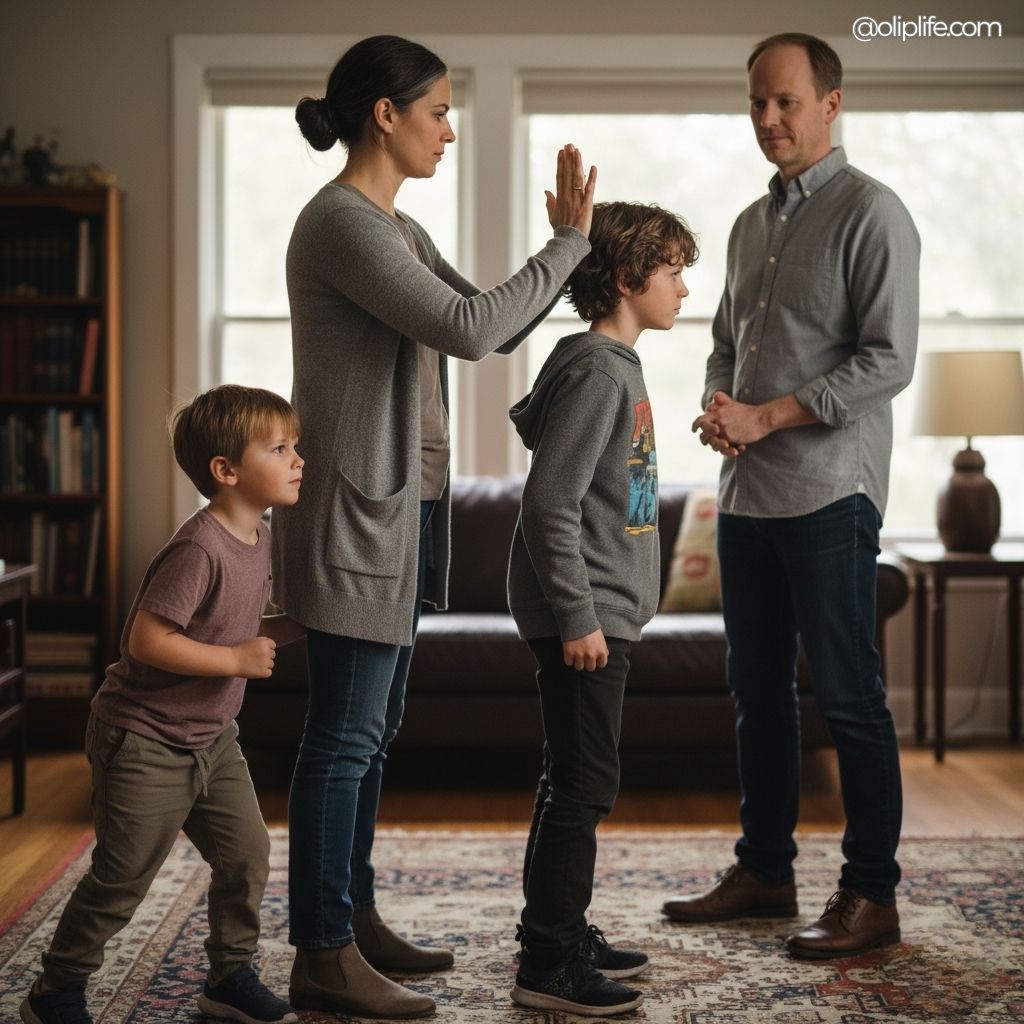
Why Stopping the Fight Feels Like the Job
Parents are trained, implicitly and explicitly, to stop fights.
We are conditioned to respond to volume, physicality, escalation. We learn that our role is to restore safety and order quickly, especially when emotions run hot and situations threaten to spiral. In those moments, speed feels responsible. Authority feels necessary. Calm feels like the finish line.
And to be clear, stopping a fight is important.
Children need adults to intervene when things become unsafe. They need help regulating when their own systems are overwhelmed. They need boundaries that prevent harm.
The problem begins when stopping the fight becomes the entire goal.
Because stopping a fight addresses behavior in the moment, but repair addresses the relationship that has just been strained.
What Gets Missed When We Only Stop the Fight
When a fight is stopped without repair, children are left holding unfinished emotional threads.
They may understand the rule that was enforced, but they don’t understand what to do with the feelings that led them there. They may know what not to do next time, but they don’t know how to reconnect, how to make sense of what happened between them, or how to restore trust.
From a child’s perspective, the message often sounds like this:
The conflict was the problem, not what happened between us.
That distinction matters more than we realize.
Because conflict is inevitable. Repair is learned.
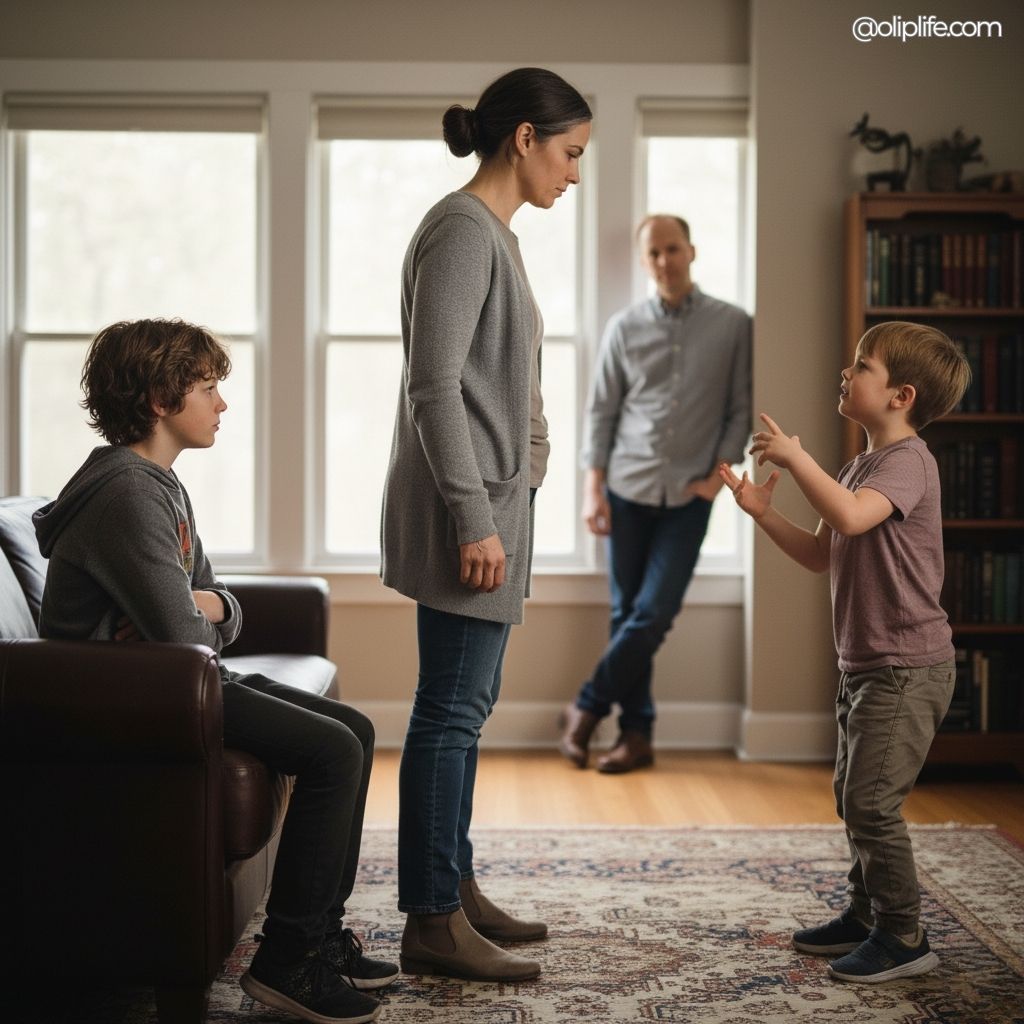
The Hidden Curriculum of Repair
Repair is not instinctive for most children.
It is a skill set that includes recognizing impact, tolerating discomfort, taking responsibility without collapsing into shame, and reconnecting without needing to “win.” None of that comes naturally, especially in the heat of emotion.
When parents only stop fights, children learn how to disengage.
When parents teach repair, children learn how to re-engage.
Those are very different lessons.
I didn’t see this clearly until I noticed how often my kids repeated the same conflicts with the same intensity, even though the rules were well established. They knew fighting wasn’t allowed. They knew the consequences. What they didn’t know was how to come back together afterward in a way that felt safe and complete.
What Repair Actually Requires
Teaching repair takes more time than stopping a fight, which is why it’s so often skipped.
It requires waiting until emotions have settled enough for learning to happen. It requires curiosity instead of verdicts. It requires staying engaged when the easiest option would be to declare the situation over and move on.
Repair asks different questions than discipline usually does.
Not “Who started it?”
Not “What rule was broken?”
But rather:
- What happened inside each person?
- What was the impact, not just the intention?
- What does each child need to feel okay again?
These questions slow things down.
They also go much deeper.
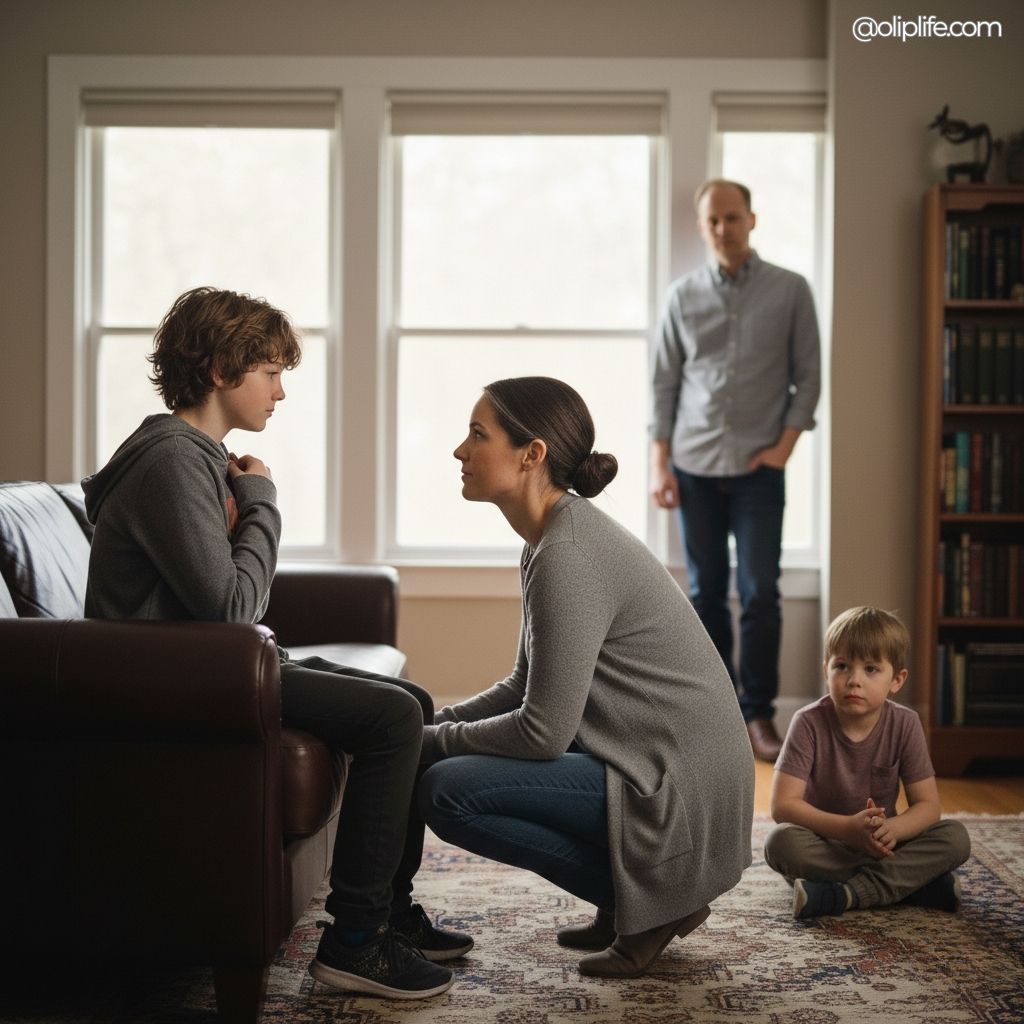
The First Time I Tried Teaching Repair
The first time I consciously chose repair over resolution, it felt awkward and unfinished.
The fight itself had already been stopped. Everyone was regulated enough to sit in the same room without exploding. Normally, that would have been the end of it. Instead, I stayed.
I resisted the urge to summarize or assign blame. I let silence stretch longer than was comfortable. I asked one child to describe how the fight felt in their body, not what the other person did wrong. I asked the other to listen without interrupting.
It wasn’t smooth.
There were deflections, shrugs, half-formed sentences. But something important happened in that messy middle space. Each child began to realize that the goal wasn’t punishment or victory.
The goal was reconnection.
Why Apologies Alone Aren’t Repair
For a long time, I thought repair meant saying sorry.
I would prompt apologies quickly, eager to close the loop and restore peace. The problem was that those apologies were often performative. They ended the conversation, but they didn’t heal anything.
True repair is not about the words “I’m sorry.”
It’s about understanding impact.
A child can apologize without grasping how their actions affected the other person. They can say the words and still feel misunderstood, resentful, or wronged. When that happens, the apology becomes another way to stop the fight, not repair the relationship.
Repair requires empathy to move in both directions.
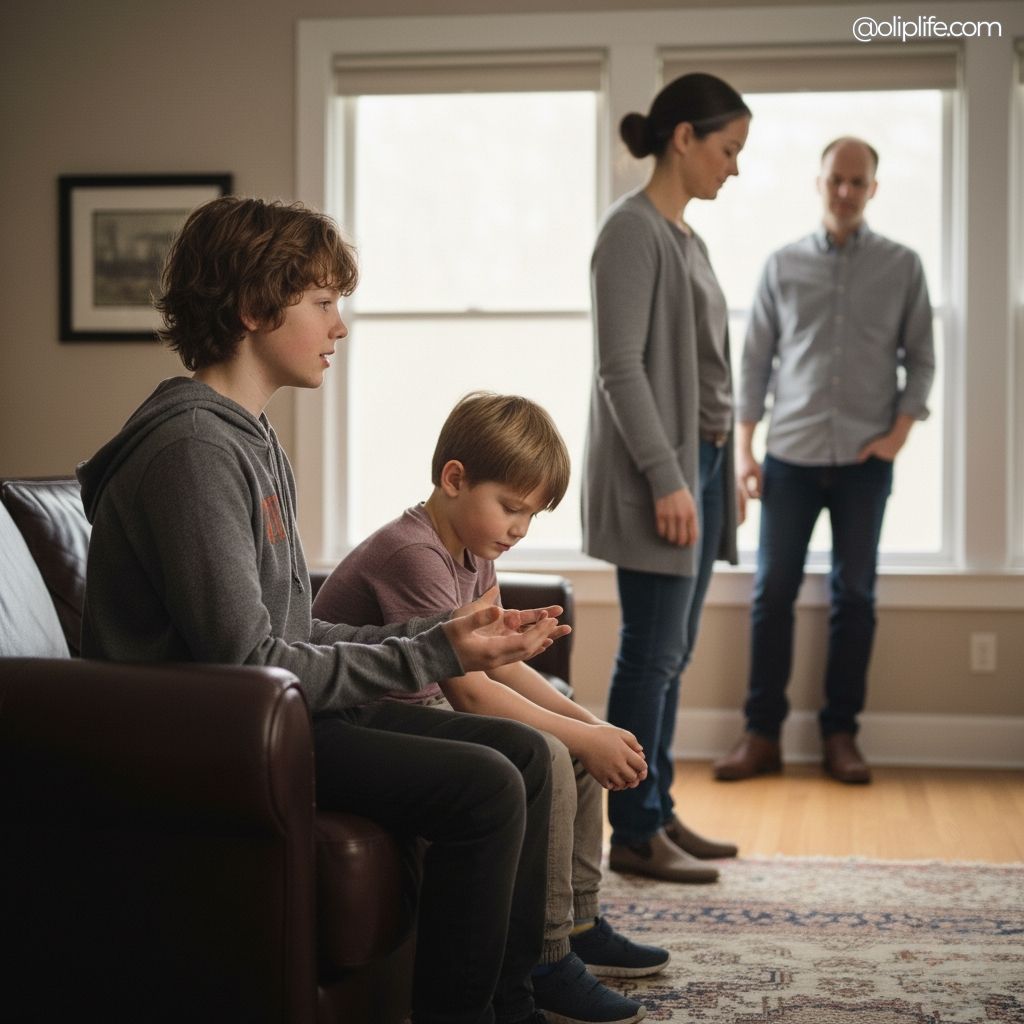
The Role of the Adult in Teaching Repair
Children cannot be expected to repair relationships they don’t yet understand.
This is where adult modeling matters far more than instruction.
When I began narrating my own repair processes out loud, something shifted. I named when I had misunderstood. I acknowledged when my tone had escalated things unnecessarily. I showed how to circle back after tension without pretending it never happened.
“I think I reacted too quickly earlier.”
“I want to understand how that felt for you.”
“I care more about fixing this than being right.”
Those moments taught more than any lecture ever could.
They showed that repair is not a weakness. It is a responsibility.
What Changed When Repair Became the Goal
When we stopped treating the end of the fight as success and started treating reconnection as the goal, the pattern of conflict changed.
Fights still happened, because children are human and learning. But they resolved more fully. The emotional residue didn’t linger as long. The same conflicts didn’t need to repeat themselves with the same intensity.
Most importantly, my kids began attempting repair on their own.
Not perfectly. Not consistently. But genuinely.
They checked in with each other later. They acknowledged impact without prompting. They learned that conflict didn’t have to threaten the relationship if repair was possible afterward.
That learning changed the emotional climate of our home.
Why Repair Builds Emotional Safety
Stopping a fight restores external safety.
Repair restores internal safety.
It teaches children that relationships can bend without breaking, that mistakes don’t equal disconnection, and that strong emotions don’t make someone unlovable.
Children who learn repair grow into adults who don’t fear conflict or avoid it at all costs. They learn how to stay present, take responsibility, and rebuild trust, skills that matter far beyond childhood.
What I Hold Onto Now
I still stop fights when I need to.
I still intervene quickly when safety is at risk.
But I no longer confuse silence with peace or separation with resolution. I pay attention to what happens after the volume drops. I watch for whether the relationship has been restored, not just whether the behavior has stopped.
Stopping the fight is the beginning.
Repair is the work.
Final Thoughts
The difference between stopping a fight and teaching repair is the difference between control and growth.
One manages the moment. The other shapes the relationship.
When parents invest in repair, they give their children tools that last far longer than any rule or consequence. They teach them how to come back to each other, how to hold responsibility without shame, and how to trust that connection can survive conflict.
And that lesson, learned slowly and imperfectly over time, becomes one of the most powerful forms of emotional inheritance we can offer.