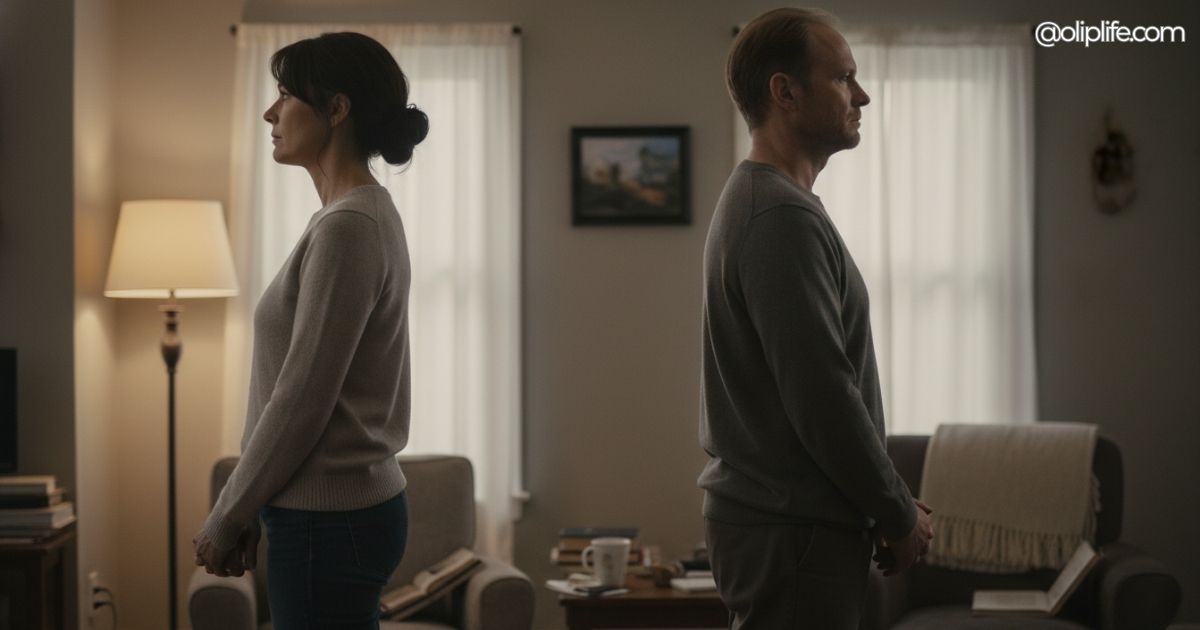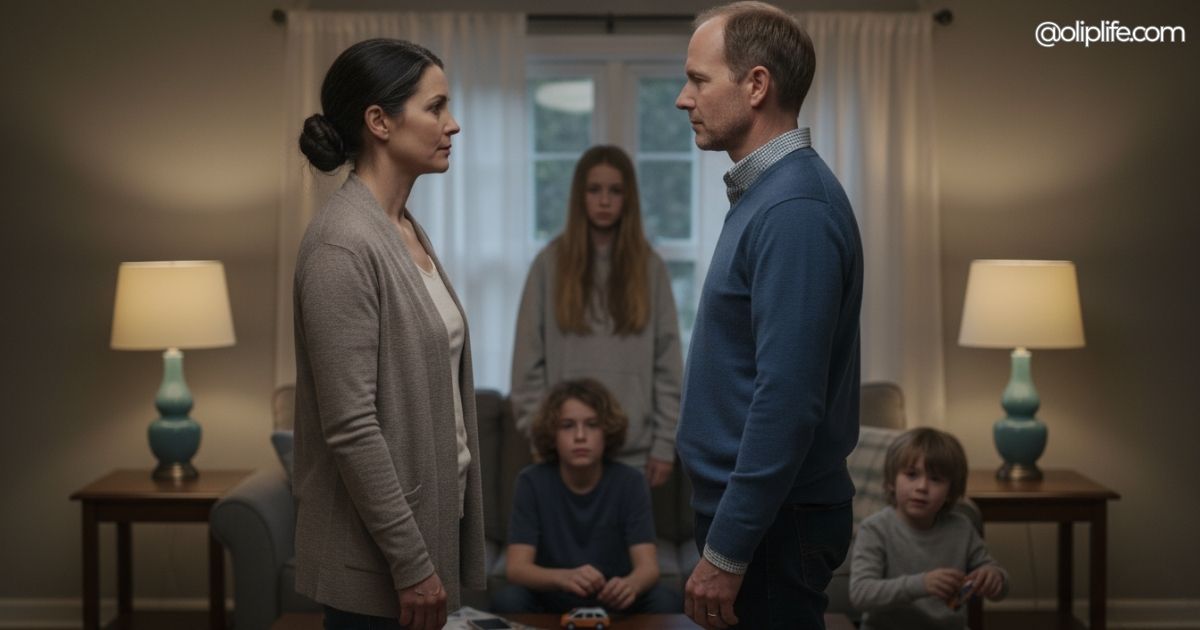
The moment that stays with me wasn’t dramatic. There was no raised voice, no visible disagreement, no obvious fracture in front of the kids. It happened in the kitchen, mid-afternoon, when one of our children asked a simple question and instinctively turned to me, then paused, glanced at my partner, and waited. Not because they were confused, but because they were checking which answer would “count.”
I remember the stillness of that pause more than anything else.
In that silence, I realized something uncomfortable. We had worked so hard to present a united front that our children had stopped seeing us as two thinking, feeling adults. We had become a single authority figure with a single approved response, and any difference between us had been carefully hidden, smoothed over, or postponed until later.
What we thought was protecting our kids was quietly flattening the truth of our family.

Why We Believed a United Front Was Necessary
Like many parents, we absorbed the idea early that consistency mattered above all else. Parenting advice, books, well-meaning conversations all reinforced the same message: children feel safer when parents agree, when rules are aligned, when adults don’t contradict each other. A united front was framed as maturity, stability, and emotional security.
So we tried to embody it fully.
We deferred disagreements. We corrected each other privately. We swallowed objections in the moment and revisited them later, if at all. When one of us made a decision on the fly, the other backed it up automatically, even if it didn’t quite sit right.
At first, it felt responsible.
Over time, it felt restrictive.
What We Didn’t Notice We Were Losing
The cost of the united front wasn’t obvious at first because nothing appeared broken.
The kids followed rules. Conflict was contained. The household ran smoothly. But something subtle was shifting beneath the surface, something that didn’t show up in behavior charts or daily routines.
Our kids stopped asking questions.
They stopped exploring different perspectives with us. They began treating decisions as fixed rather than discussable. When they disagreed, they didn’t look for dialogue. They looked for strategy.
Who will say yes?
Who will hold the line?
Is there room here, or not?
That pause in the kitchen wasn’t hesitation. It was calculation.
The Difference Between Safety and Certainty
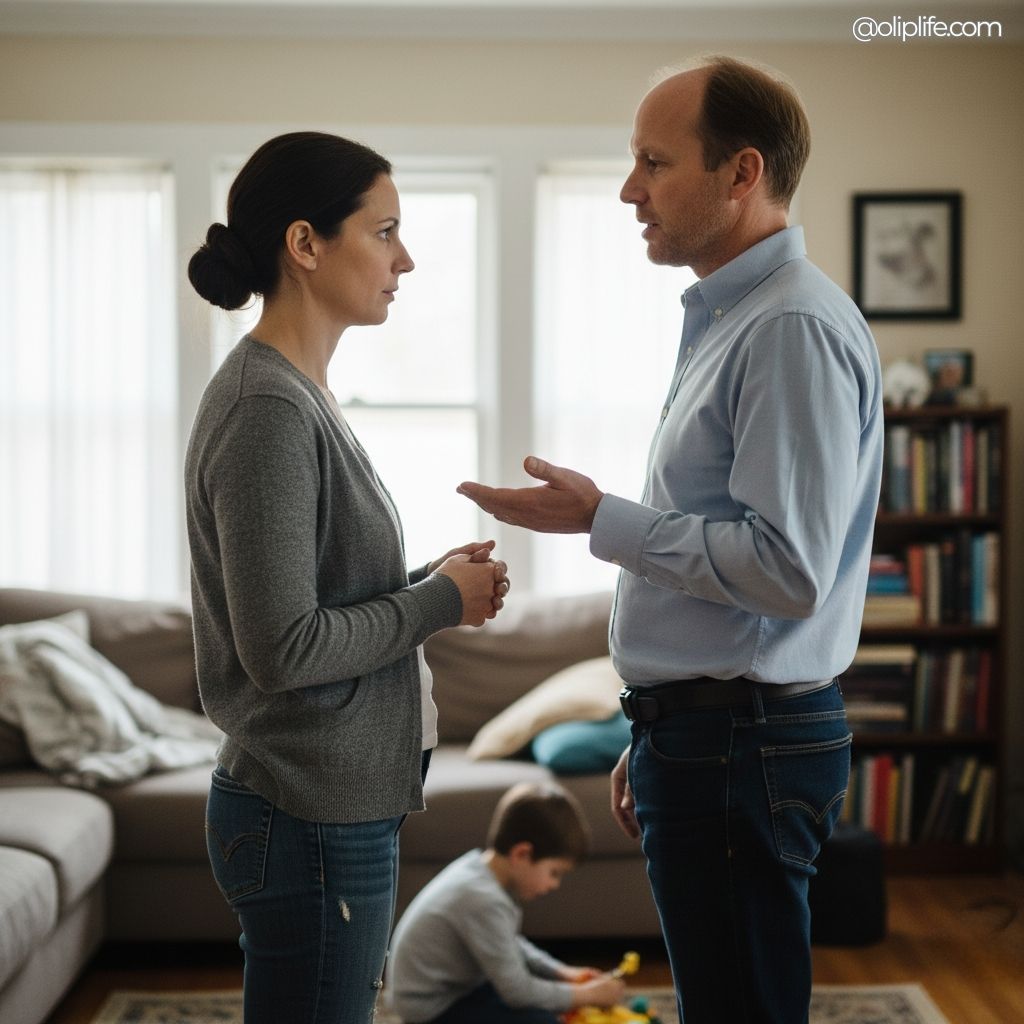
What we misunderstood was the difference between safety and certainty.
A united front offers certainty. Children know what the answer will be. They know which boundaries exist. They know what not to question.
Safety, however, comes from something else entirely.
Safety comes from knowing that disagreement doesn’t threaten connection. That differing views can coexist without rupture. That authority doesn’t require uniformity.
By hiding our differences, we weren’t creating emotional safety. We were creating predictability at the expense of authenticity.
How Suppressing Disagreement Changed Us
Trying to maintain a united front didn’t just affect the kids. It reshaped our partnership.
We became cautious with each other in parenting moments. I hesitated before expressing uncertainty. My partner hesitated before voicing disagreement. Not because we didn’t trust each other, but because we didn’t want to undermine the appearance of cohesion.
Over time, that hesitation hardened into habit.
Parenting became less collaborative and more performative, less about mutual problem-solving and more about maintaining alignment, even when alignment didn’t reflect reality.
We weren’t lying to our children.
But we weren’t telling the whole truth either.

The Shift That Changed Everything
The shift didn’t happen because we planned it.
It happened because the pressure became unsustainable.
One evening, after another moment where we’d quietly overridden our own instincts to preserve consistency, one of us finally said what had been sitting unspoken for months: “I don’t actually agree with that, and I don’t think pretending we do is helping.”
There was relief in that admission, followed quickly by fear.
If we stopped presenting a united front, what would happen to authority? To stability? To trust?
The answer, it turned out, was not what we expected.
What Happened When We Let Differences Exist
The first change was internal.
We stopped rushing to agreement. We allowed ourselves to say, “I see this differently,” even when the kids were present. Not arguing, not debating endlessly, but naming difference without drama.
At first, it felt risky.
Then something surprising happened.
The kids leaned in.
Instead of exploiting disagreement, they became curious. They listened. They asked questions. They watched how we navigated difference without escalation or dismissal.
They weren’t destabilized by seeing two perspectives.
They were grounded by it.

Authority Didn’t Weaken, It Became More Trustworthy
One of my biggest fears was that authority would fracture, that kids would start playing us against each other or dismissing boundaries entirely.
That didn’t happen.
What happened instead was that authority became more human.
Decisions still existed. Boundaries were still upheld. But now they came with context. Kids could see that choices were made thoughtfully, sometimes after disagreement, sometimes after compromise, sometimes after revisiting an earlier stance.
Rules no longer felt arbitrary.
They felt considered.
And that made them easier to respect.
What the Kids Actually Learned
When we stopped trying to be a united front, our children learned lessons we never could have taught intentionally.
They learned that disagreement doesn’t equal danger.
They learned that adults can revise their thinking.
They learned that authority can be flexible without being weak.
Perhaps most importantly, they learned that relationships can hold difference without breaking.
That lesson will serve them far longer than any perfectly aligned response ever could.
The Role of Repair Became Clearer
Allowing disagreement also made repair more visible.
When one of us reacted poorly or made a call we later reconsidered, we could name that openly. Not as a correction in front of the kids, but as a reflection. “I think I responded too quickly earlier,” or “I’m realizing I might want to handle that differently next time.”
Those moments mattered.
They showed our children that power doesn’t need to be defended at all costs. It can be examined, adjusted, and shared.
What Changed in Our Relationship
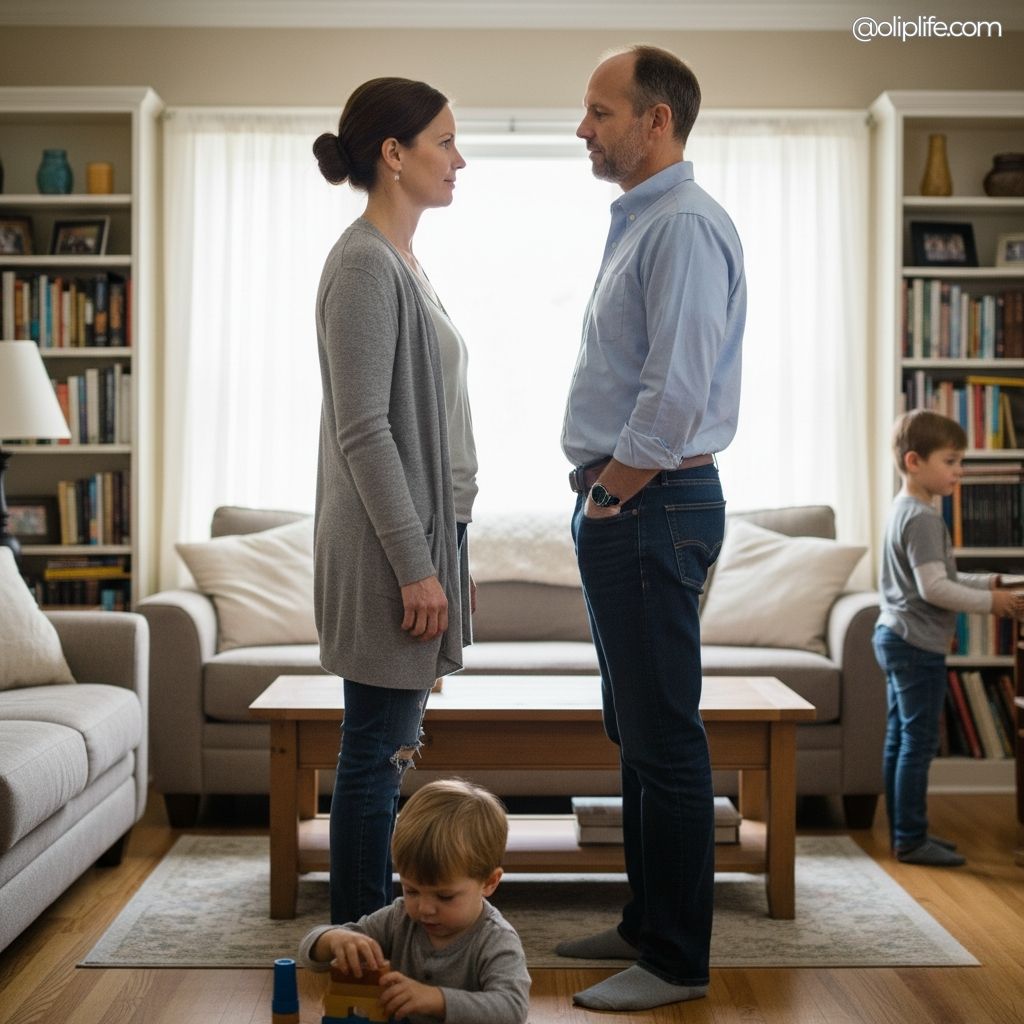
Letting go of the united front brought us closer, not further apart.
We became more honest with each other. Less guarded. More willing to slow down and explore nuance instead of defaulting to agreement for the sake of appearances.
Parenting became less about maintaining control and more about maintaining connection, both with each other and with our kids.
That shift changed the emotional climate of our home.
What I Know Now
A united front can be useful in moments of crisis or safety.
But as a constant posture, it can silence important truths.
Children don’t need parents who always agree. They need parents who can disagree respectfully, repair openly, and make decisions thoughtfully without pretending certainty where it doesn’t exist.
What changed when we stopped trying to be a united front wasn’t chaos.
It was depth.
Final Thoughts
Parenting doesn’t require perfection or seamless alignment. It requires presence, honesty, and the courage to model real relationships.
When we stopped trying to be a united front, we stopped performing stability and started practicing it. We showed our children that authority and humility can coexist, that difference isn’t a threat, and that belonging doesn’t depend on everyone thinking the same way.
In the end, letting go of the united front didn’t weaken our family.
It made it more real.
And real, it turns out, is what children trust the most.