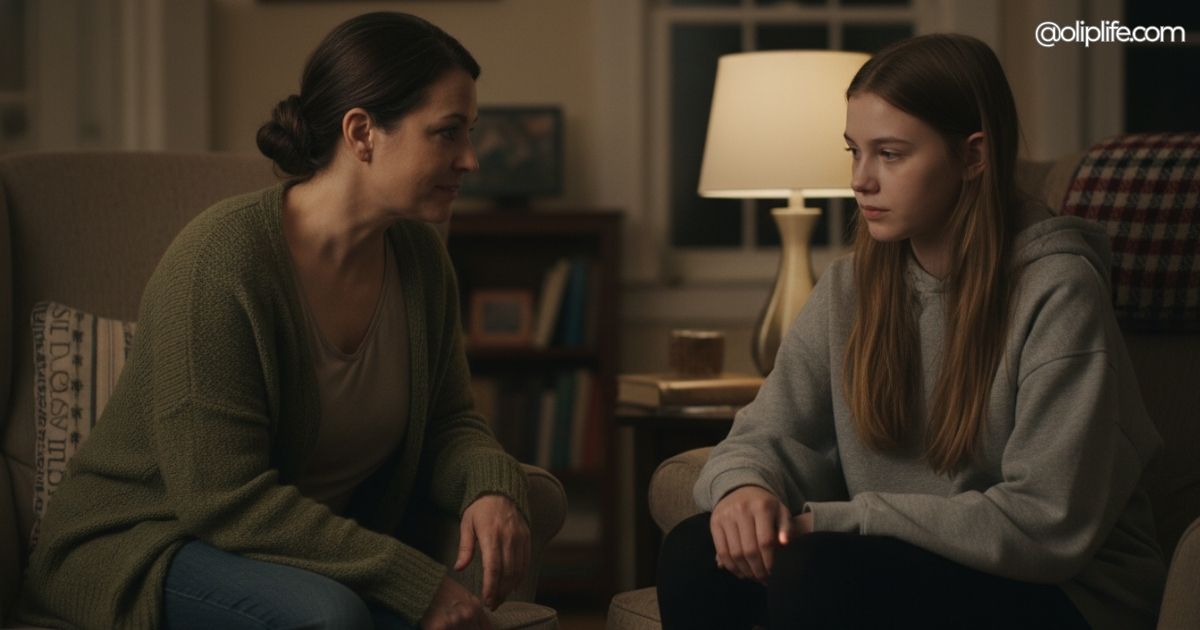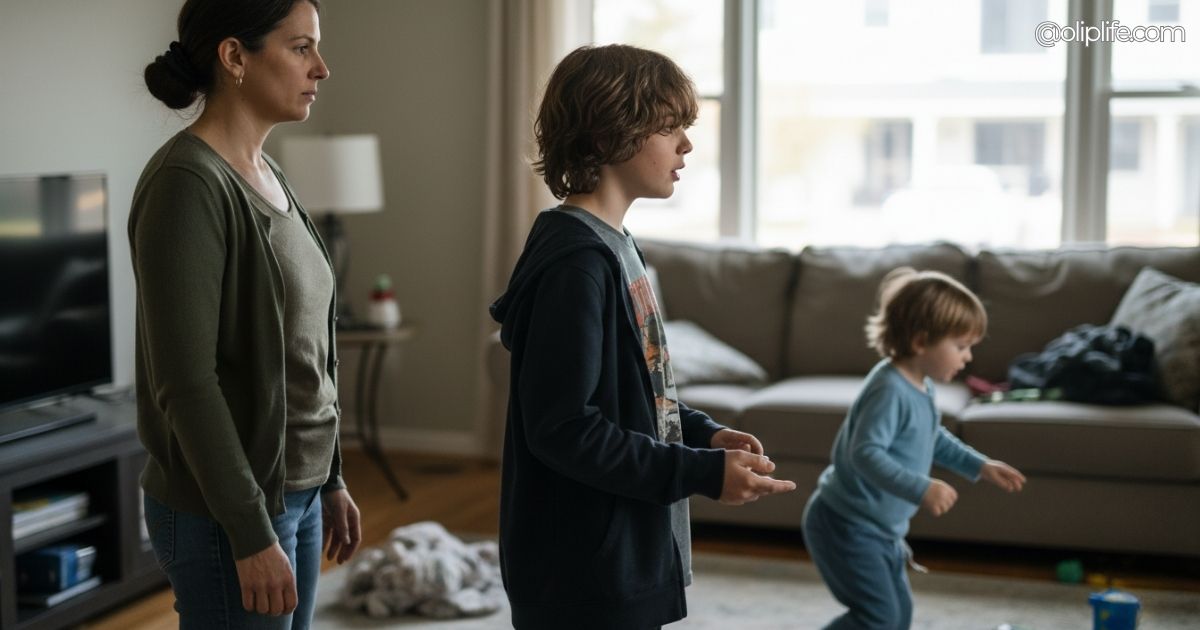
The consequence was already decided before I finished speaking, and I could see it land without meaning. My child nodded, not in agreement, but in recognition, the kind that says, I’ve heard this before and I know what comes next. There was no surprise, no resistance, no real understanding either. Just a familiar sequence playing out exactly as it had many times before.
In that moment, something uncomfortable surfaced for me. The consequence had done its job in the narrowest sense. It ended the behavior. It restored order. It allowed the day to move on. And yet, it felt hollow, like placing a lid on something that would inevitably boil over again.
That was the moment I began to understand that we weren’t dealing with a discipline problem. We were dealing with a skill gap I had been repeatedly overlooking.

The Pattern That Wouldn’t Resolve
The behaviors themselves were not extreme. They weren’t dangerous or shocking. They were the kinds of struggles parents encounter daily and often dismiss as phases or stubbornness. Emotional reactions that arrived too quickly. Frustration that tipped into shutdown. Rigidity when expectations shifted unexpectedly.
Each time, I responded the same way. I explained the rule. I named the boundary. I followed through with the agreed-upon consequence. I reminded myself that consistency was the foundation of good parenting, even when it felt exhausting.
What unsettled me was not that the behaviors happened, but that they returned with such reliability. The consequence didn’t seem to build on itself. It didn’t accumulate into learning. It simply reset the situation until the next time stress stripped away whatever surface-level control had been gained.
I started to realize that we weren’t moving forward. We were circling.
What the Consequence Was Asking For
Consequences carry an unspoken assumption that often goes unnoticed. They assume the child has access to certain internal skills at the moment the behavior occurs. The ability to pause. The ability to regulate emotion. The ability to think flexibly when something doesn’t go as planned. The ability to choose an alternative response under pressure.
Those assumptions make sense to adults because we forget how long it took us to develop those skills ourselves, and how fragile they still are when we’re tired, overwhelmed, or emotionally activated.
In our home, I was holding my child accountable for capacities they did not yet reliably possess, especially in moments when their nervous system was already overloaded. The consequence wasn’t teaching anything new because it was built on skills that weren’t there yet.

The Look That Changed Everything
The shift didn’t come during a major blowup. It came during a quiet exchange that should have felt routine.
As I explained the consequence, I noticed confusion rather than defiance. Not the kind of confusion that comes from ignoring expectations, but the kind that comes from genuinely not knowing how to meet them when emotions move faster than thought.
That look stayed with me.
It forced me to confront something I had avoided: my child wasn’t choosing the wrong behavior. They were defaulting to the only response available to them in that moment.
And no amount of consequence could replace a missing skill.
Behavior as Information, Not Opposition
Once I allowed myself to see behavior as information rather than opposition, the landscape changed entirely.
The emotional outburst wasn’t a refusal to comply. It was a signal of limited regulation under stress.
The rigidity wasn’t an attempt to control. It was an inability to shift gears once overwhelmed.
The avoidance wasn’t laziness. It was uncertainty paired with fear of failure.
These behaviors were communicating needs I hadn’t been listening for because I was too focused on enforcing outcomes.
Consequences manage behavior. Skills change behavior.
I had been relying almost exclusively on the former while assuming the latter would somehow develop on their own.

Why I Held Onto Consequences So Tightly
Part of my resistance to shifting away from consequences came from fear I didn’t initially recognize.
I worried that focusing on skills would look like lowering standards. I worried that empathy would blur boundaries. I worried that if consequences weren’t emphasized, structure would dissolve into permissiveness.
Consequences felt solid. Predictable. They reassured me that I was doing my job as a parent.
What I didn’t understand then was that boundaries and skill-building are not opposing forces. They are complementary. One without the other creates imbalance.
Shifting the Work Earlier in the Process
The real change began when I stopped treating discipline as something that happened after behavior and started treating it as something that happened before.
Instead of waiting for frustration to peak, we practiced during calm moments. We talked about what frustration felt like physically. We rehearsed pausing and choosing words when nothing was at stake. We named alternatives without expecting immediate mastery.
This wasn’t quick or tidy. It required repetition and patience, both of which were harder than enforcing a consequence.
But slowly, something began to shift.

When Skills Started to Appear
The next time a familiar situation arose, the response wasn’t perfect. There was still emotion. There was still struggle. But there was also something new.
A pause.
A moment of awareness.
An attempt, however clumsy, to access a skill that hadn’t been there before.
That attempt mattered more than the outcome.
Because it meant learning was happening.
And once skills began to emerge, consequences started to function differently. They no longer carried the entire weight of teaching. They reinforced understanding instead of trying to create it.
Accountability Without Shame
Addressing the underlying skill didn’t mean abandoning accountability.
Boundaries remained clear. Expectations stayed intact. Consequences still existed when needed.
The difference was that accountability no longer stood alone. It was paired with instruction.
When a consequence followed behavior, it came with clarity about what skill needed more practice, not a vague directive to “do better next time.” The focus shifted from character to capacity, from failure to development.
Shame receded. Learning expanded.
The Change I Felt as a Parent
Perhaps the most profound shift happened internally.
I stopped feeling personally challenged by repeated behavior. I stopped interpreting setbacks as defiance or disrespect. I stopped bracing myself for the next incident as if it were proof that nothing was working.
Instead, I began noticing quieter signs of progress. Faster recovery. Earlier recognition of emotion. Increased willingness to try again even after getting it wrong.
These changes didn’t announce themselves dramatically.
They accumulated.

What This Taught Me About Discipline
Discipline is not about controlling outcomes. It’s about building capacity.
Consequences can stop behavior in the moment, but skills change what happens next time. Without skills, consequences only maintain order. With skills, they support growth.
The question that reshaped my parenting was not, “How do I stop this behavior?” but, “What does my child need to learn so this behavior becomes unnecessary?”
That question changed everything.
Final Thoughts
Consequences didn’t work in our home until we addressed the underlying skill because consequences alone were never designed to teach regulation, flexibility, or problem-solving.
Children grow when we invest in their ability to succeed, not just their compliance when they fail.
When parents shift from enforcement to development, behavior begins to change not out of fear, but out of capacity.
And that kind of change lasts.