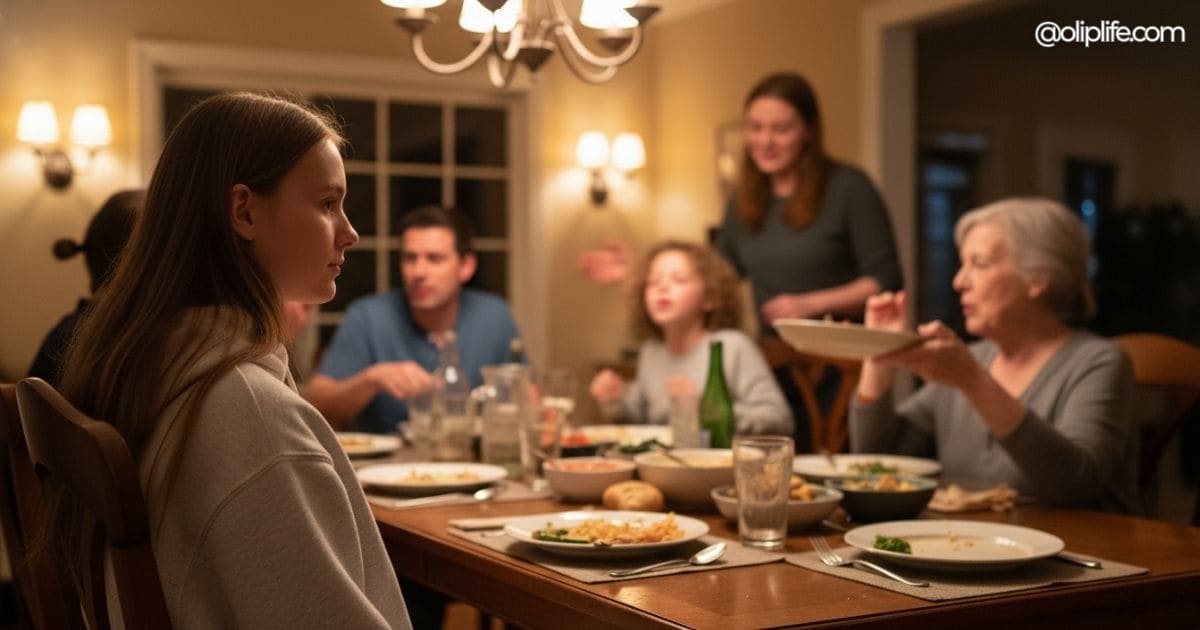
Our house has never been quiet.
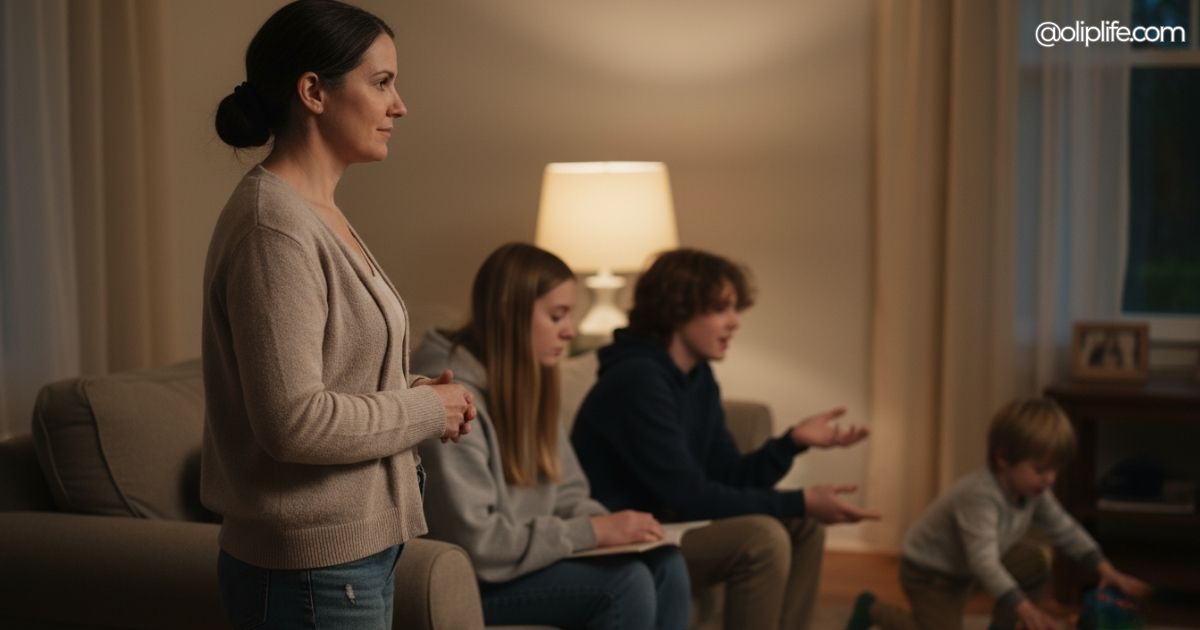
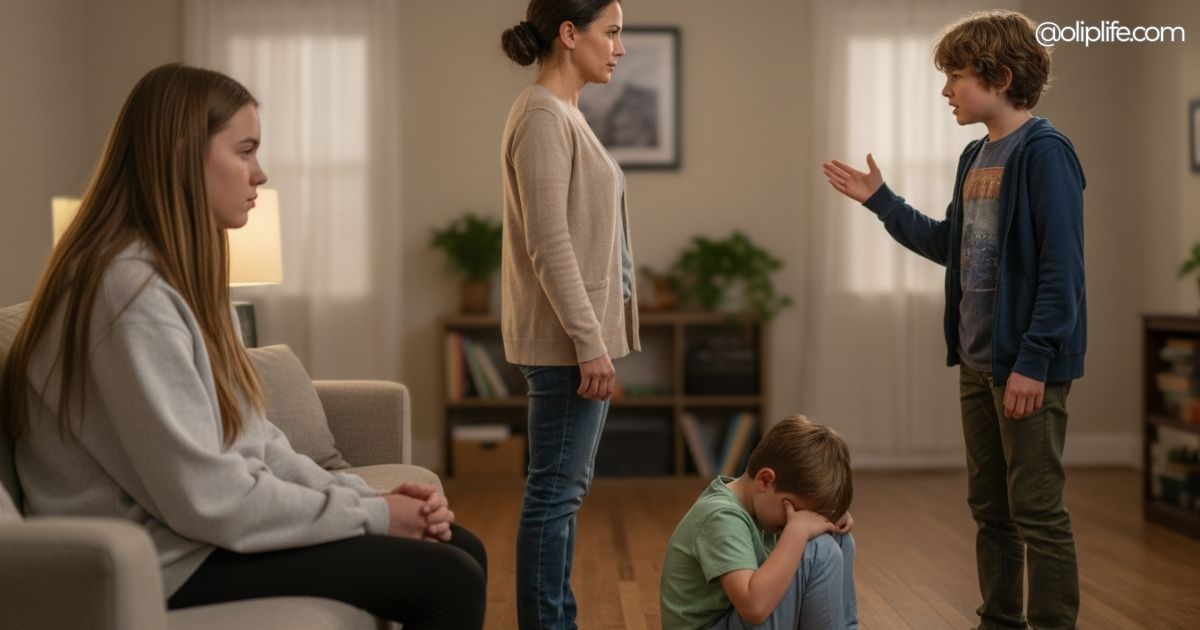
It’s not chaotic in the way people imagine chaos, not constant shouting or disorder, but it is full, layered, and alive. There are overlapping conversations at dinner, footsteps on the stairs, music playing while someone else is trying to explain a story, doors opening and closing, laughter that spills from one room into another. Emotion, too, moves loudly here. Frustration is voiced. Excitement announces itself. Opinions are shared freely and often at the same time.
For most of my children, this environment feels energizing. They push back, speak up, claim space instinctively. But for one of them, the volume of our household has always landed differently, and it took me longer than I’d like to admit to understand what that difference meant.
Sensitivity, I learned, doesn’t disappear in loud environments. It adapts. And sometimes, the adaptation comes at a quiet cost.
The Child Who Felt Everything Before Saying Anything
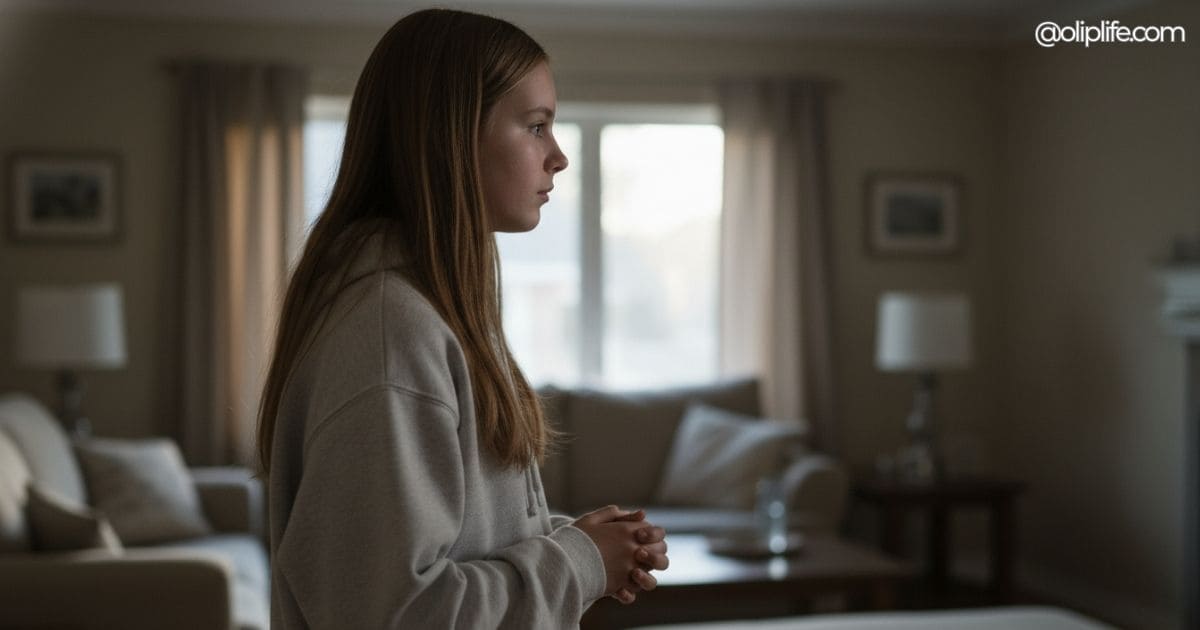
From early on, this child noticed things others missed.
A shift in tone before a voice was raised.
A look exchanged between adults across the room.
The emotional undercurrent beneath casual conversation.
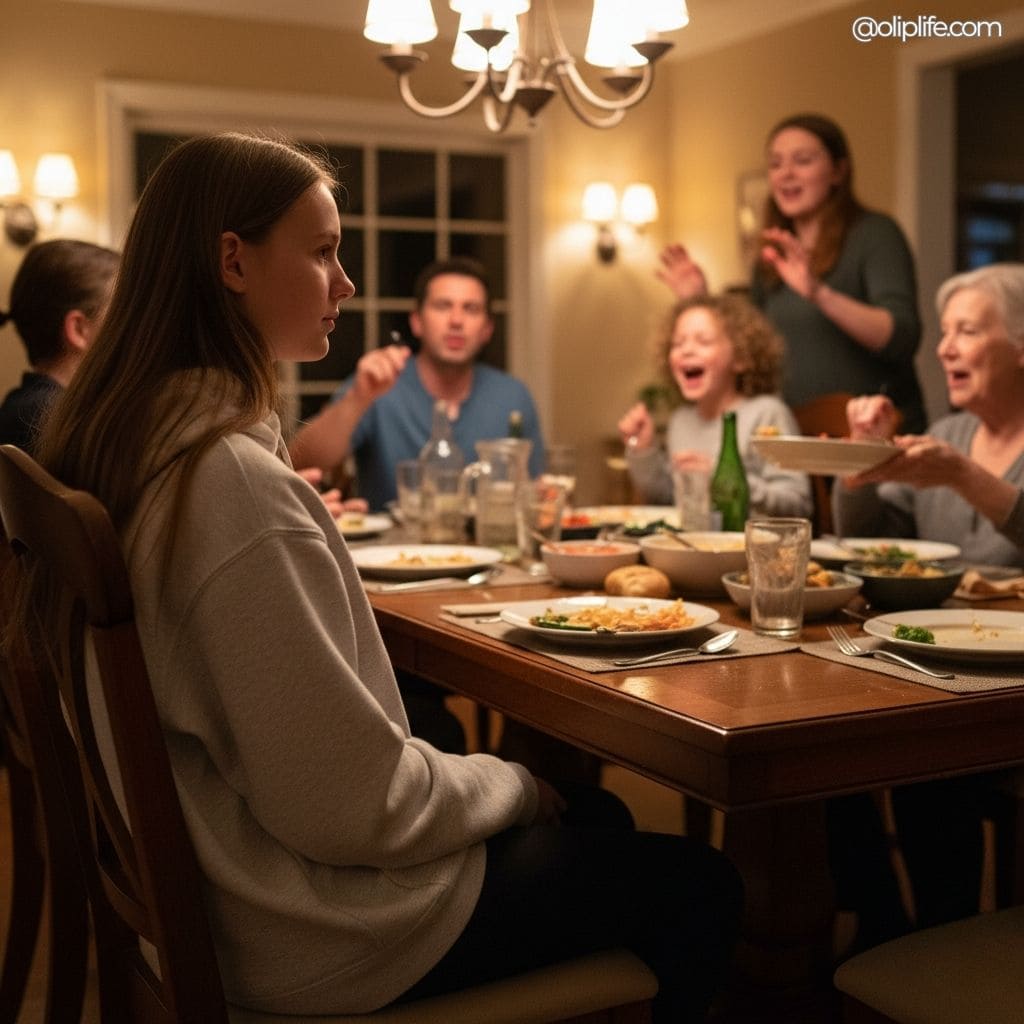
While the rest of the house moved outward, this child moved inward. Not withdrawn, exactly, but observant in a way that was easy to overlook because it didn’t disrupt anything. They learned quickly how to navigate the noise by staying slightly ahead of it, reading the room before the room announced itself.
At first, I thought this was maturity.
They didn’t interrupt. They waited patiently. They adjusted their needs to the moment without complaint. In a loud household, that kind of behavior reads as cooperation, as ease, as one less thing to manage. I praised it without realizing what I was praising.
What I was really praising was adaptation.
How Loudness Shapes a Sensitive Nervous System
Loud households aren’t just about sound. They’re about pace, intensity, and emotional throughput.
Things happen quickly. Emotions are expressed immediately. Conversations overlap. Conflicts arise and resolve in real time, often out loud and in the open. For children whose nervous systems thrive on stimulation, this feels engaging. For sensitive children, it can feel like standing too close to a speaker with no volume control.
Sensitivity doesn’t mean fragility. It means depth of processing.
A sensitive child doesn’t just hear noise. They absorb context, emotion, implication. In a loud household, that means they are processing more than what’s being said. They are tracking mood shifts, anticipating conflict, and monitoring the emotional safety of the environment long before anyone names it.
Over time, that constant vigilance becomes a skill.
It also becomes a burden.
The Adaptations That Look Like Strength
Sensitive children growing up in loud households often develop impressive coping strategies.
They become excellent observers.
They learn to self-regulate quietly.
They pick their moments carefully.
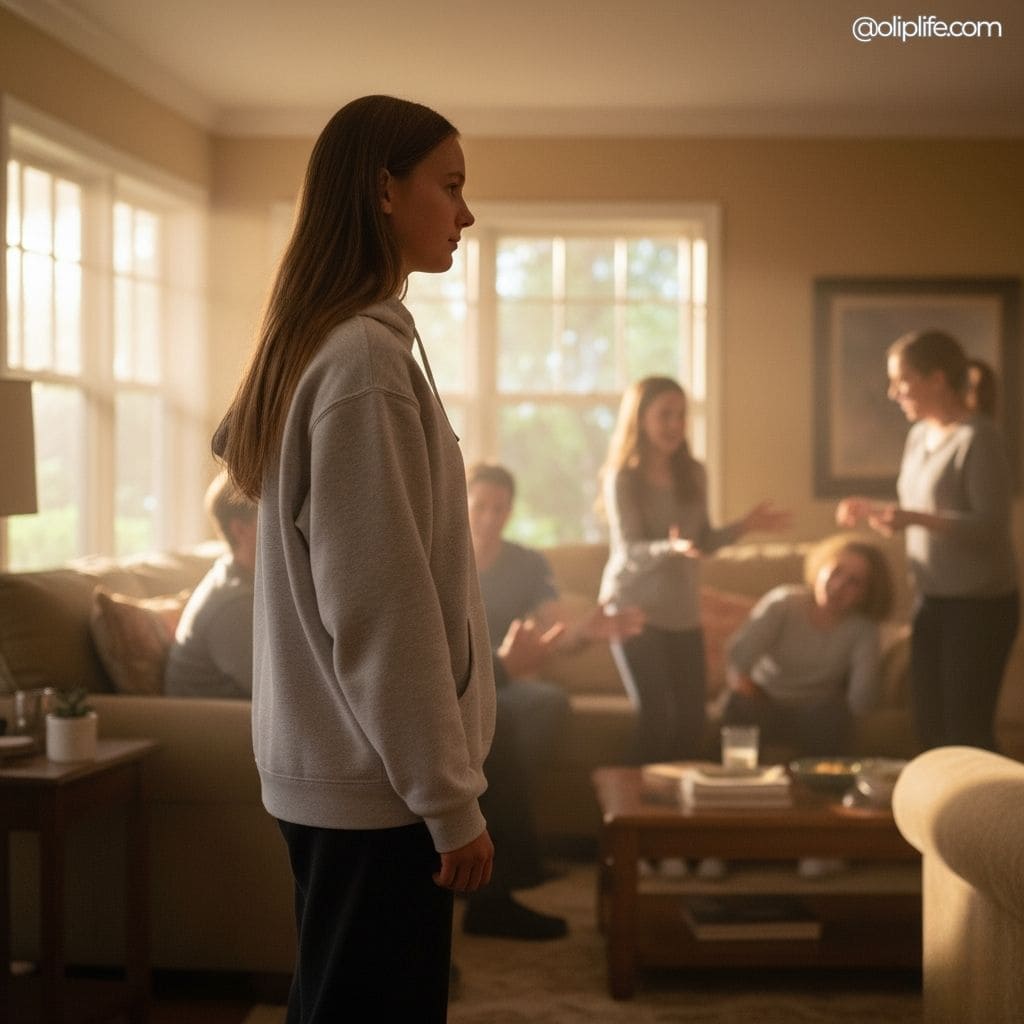
They know when to speak and when to wait. They sense when a room can hold one more feeling and when it can’t. They may even act as emotional buffers, stepping in to soothe, deflect, or soften tension without being asked.
To adults, this looks like emotional intelligence.
And it is.
But it’s also effort.
Effort that often goes unnoticed because it doesn’t cause problems.
What I Mistook for Comfort
For a long time, I assumed my child was comfortable in our household because they weren’t complaining.
They weren’t melting down.
They weren’t acting out.
They weren’t asking for change.
They simply adjusted.
It wasn’t until a quiet moment, one that arrived unexpectedly, that I realized adjustment wasn’t the same as ease.
We were sitting together in a rare pocket of stillness when they said, almost casually, “It’s hard to think when everyone is talking.”
The statement wasn’t an accusation. It wasn’t even a request.
It was information.
And it reframed years of behavior in a single sentence.
The Emotional Cost of Constant Adaptation
When sensitive children spend years adapting to loud environments, they often internalize the idea that their needs are secondary to the collective rhythm.
They learn to wait.
They learn to manage internally.
They learn that silence is safer than interruption.
Over time, this can shape how they relate to others, especially in group settings. They may hesitate to speak even when they have something valuable to say. They may downplay their discomfort to avoid adding to the noise. They may feel overwhelmed without being able to articulate why.
None of this is dramatic.
That’s what makes it easy to miss.
What Loud Households Teach Without Meaning To
Our household never intended to teach this child that their needs mattered less.
But environments teach constantly, even without words.
A loud household teaches that space is claimed by those who take it.
That conversations move quickly.
That emotions are expressed outwardly and immediately.
Sensitive children learn those rules and then learn how to survive within them.
Sometimes that survival looks like strength.
Sometimes it looks like silence.
When I Began to Notice the Gaps
As this child grew older, I noticed patterns that didn’t fit the story I had been telling myself.
They needed more recovery time after busy days.
They became overwhelmed in group settings more quickly than siblings.
They struggled to articulate needs in the moment, only naming them later, when things were calm.
These weren’t signs of weakness.
They were signs of a nervous system that had been working hard for a long time.
What Changed When I Adjusted the Environment
I couldn’t change the fundamental nature of our family. We are still loud. We still talk over each other sometimes. We still express emotion openly.
But I could create pockets of quiet.
I began checking in privately rather than assuming public calm meant internal calm. I made space for one-on-one conversations where volume wasn’t a factor. I normalized stepping away without framing it as avoidance. I paid attention to how often this child was adapting and how rarely the environment adapted in return.
Most importantly, I stopped praising them for being “easy” or “understanding” and started acknowledging the effort behind that understanding.
What Happened When the Pressure Eased
The changes were subtle but meaningful.
They spoke up sooner, before overwhelm built.
They named needs without apology.
They stopped bracing themselves so tightly during loud moments.
Not because the house became quieter, but because they felt permitted to exist fully within it.
The environment didn’t have to change completely.
The awareness did.
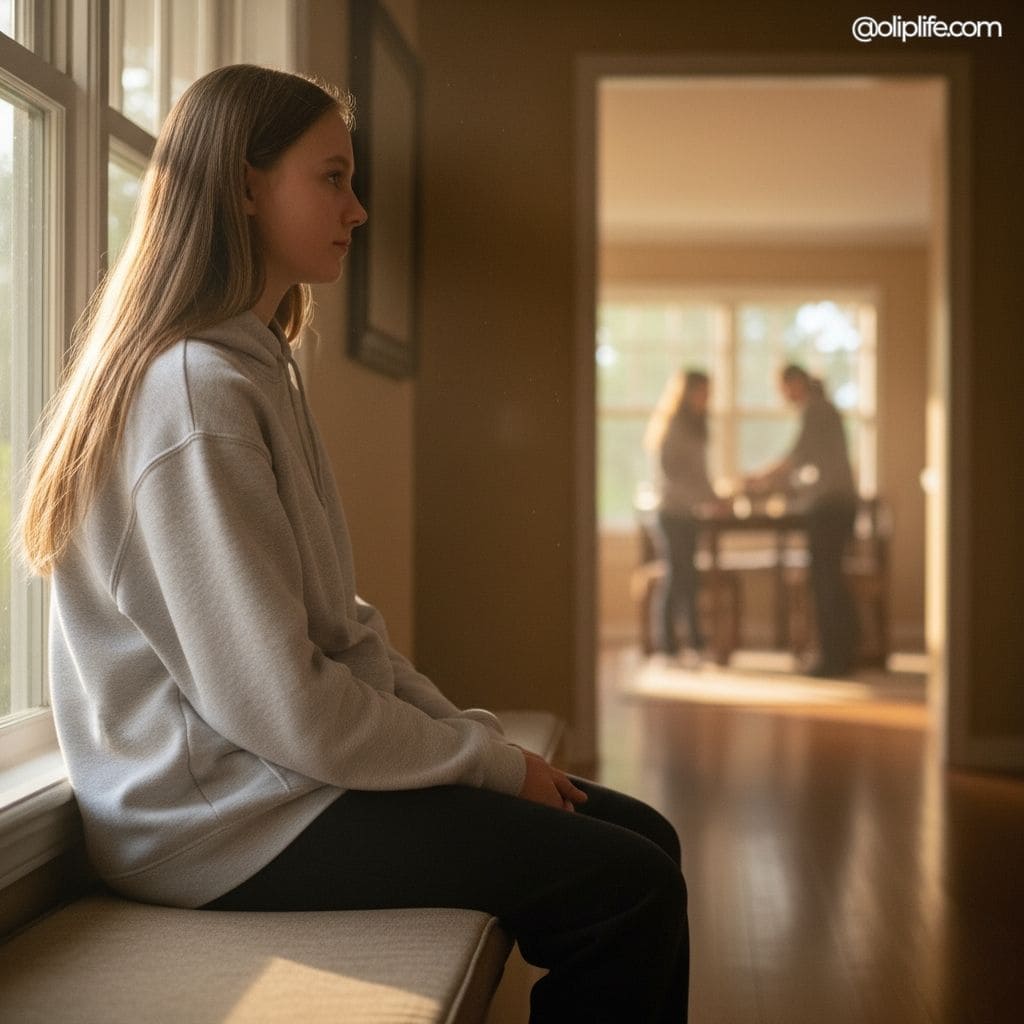
Sensitivity Isn’t a Flaw in a Loud Home
A sensitive child in a loud household isn’t mismatched.
They are offering contrast.
They bring awareness to emotional nuance. They notice what others miss. They slow the system down in quiet, often invisible ways. When supported, they add depth and balance to environments that might otherwise move too fast to reflect.
The problem isn’t loudness.
The problem is when sensitivity is only rewarded for its ability to adapt, rather than supported for its inherent value.
What I Know Now
What happens when a sensitive child grows up in a loud household depends largely on whether that sensitivity is noticed and protected.
Without awareness, sensitivity turns inward and becomes self-management.
With awareness, it becomes self-knowledge.
The difference between those two outcomes is everything.
Final Thoughts
Loud households are not harmful by default.
They are expressive, connected, and full of life.
But within them live children with different thresholds, different processing speeds, different needs for quiet and recovery. When parents learn to see sensitivity not as a problem to solve, but as information about how a child experiences the world, the entire family benefits.
A sensitive child doesn’t need the house to be silent.
They need to know there is room for them to speak, pause, retreat, and return without losing connection.
When that understanding exists, sensitivity stops being something a child manages alone and becomes something a family learns to hold together.
And in a loud house, that kind of listening is one of the most powerful forms of care there is.