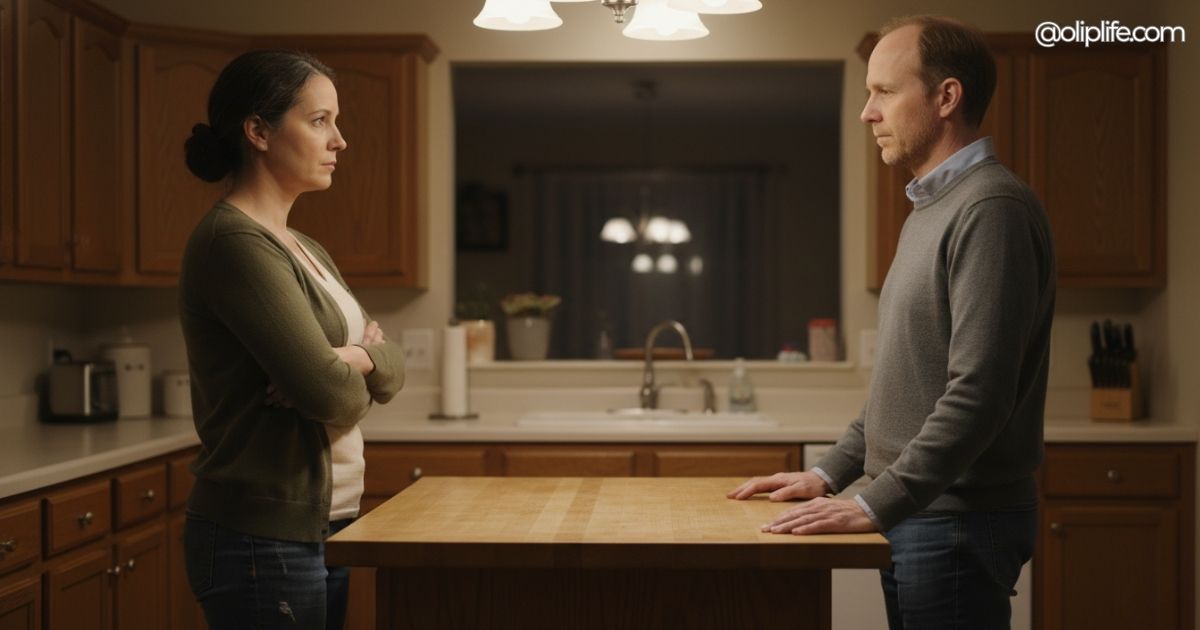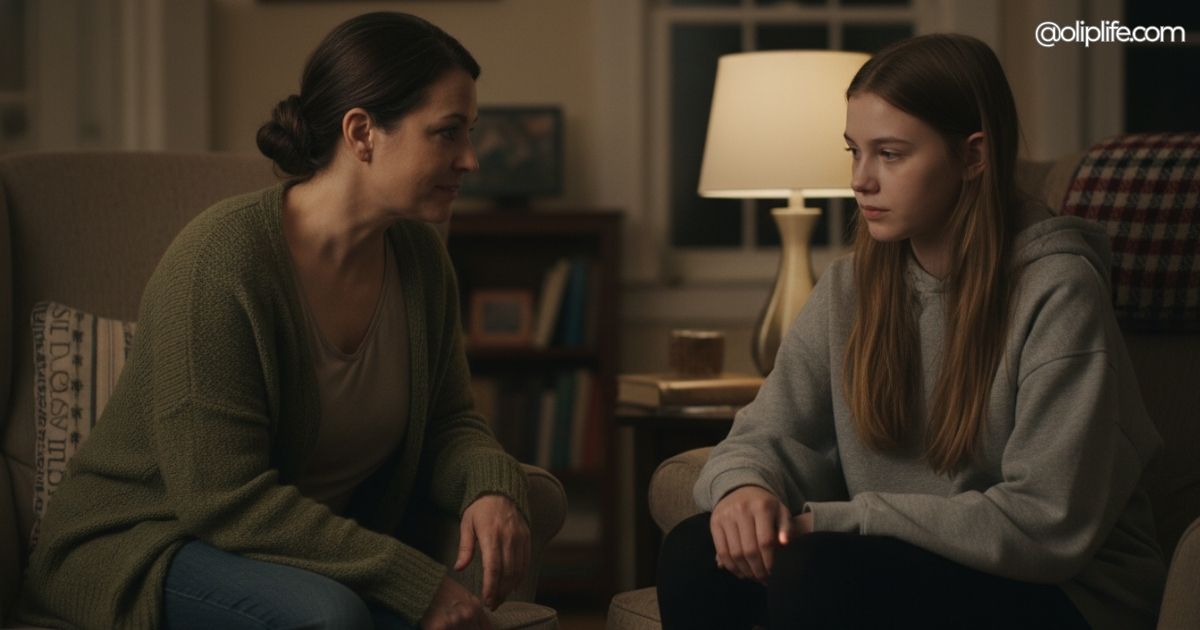
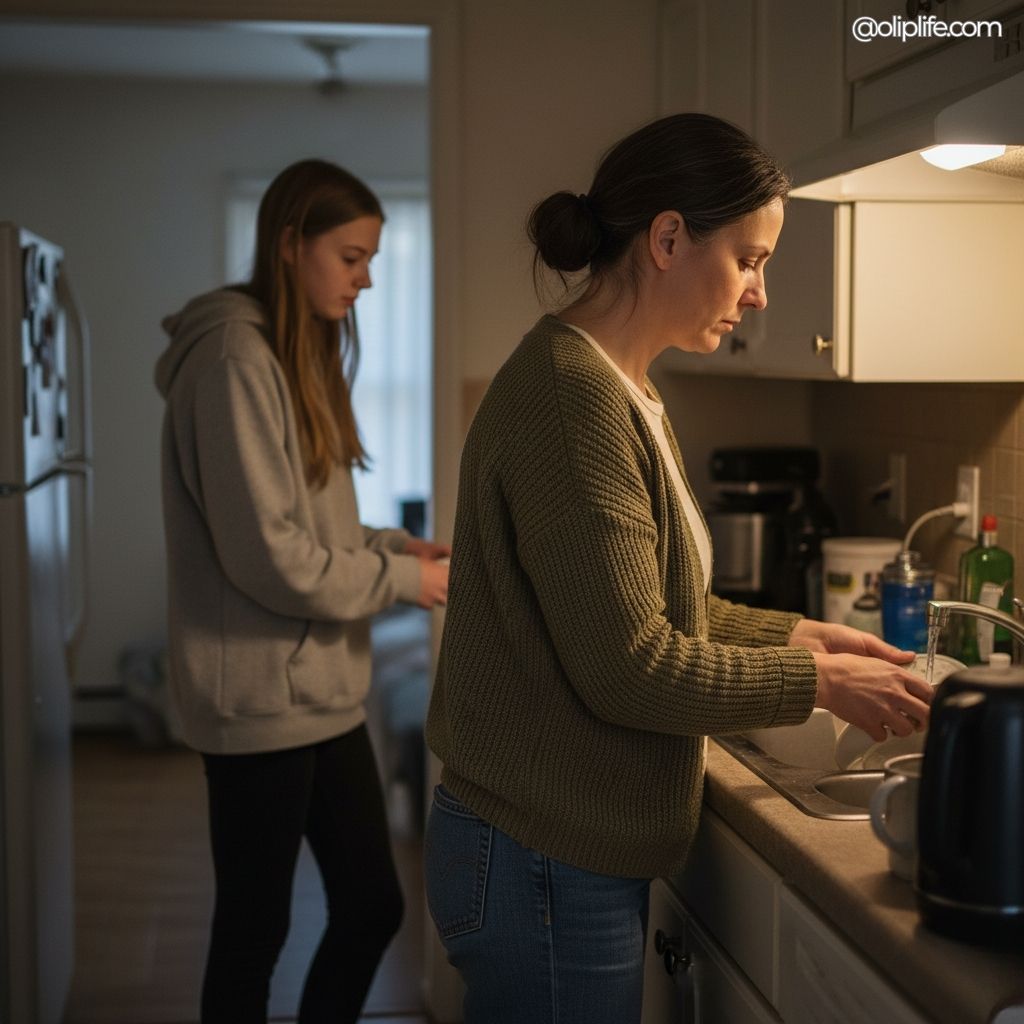
The night this lesson finally reached me didn’t begin with raised voices or obvious tension. It began with dishes.
I was standing at the sink, rinsing plates that no one had scraped properly, listening to the low hum of the dishwasher and the even lower hum of my own irritation. It wasn’t about the dishes, of course. It never is. It was about the accumulation of small moments that hadn’t gone the way I wanted them to, the quiet sense that I was carrying more than I had admitted out loud.
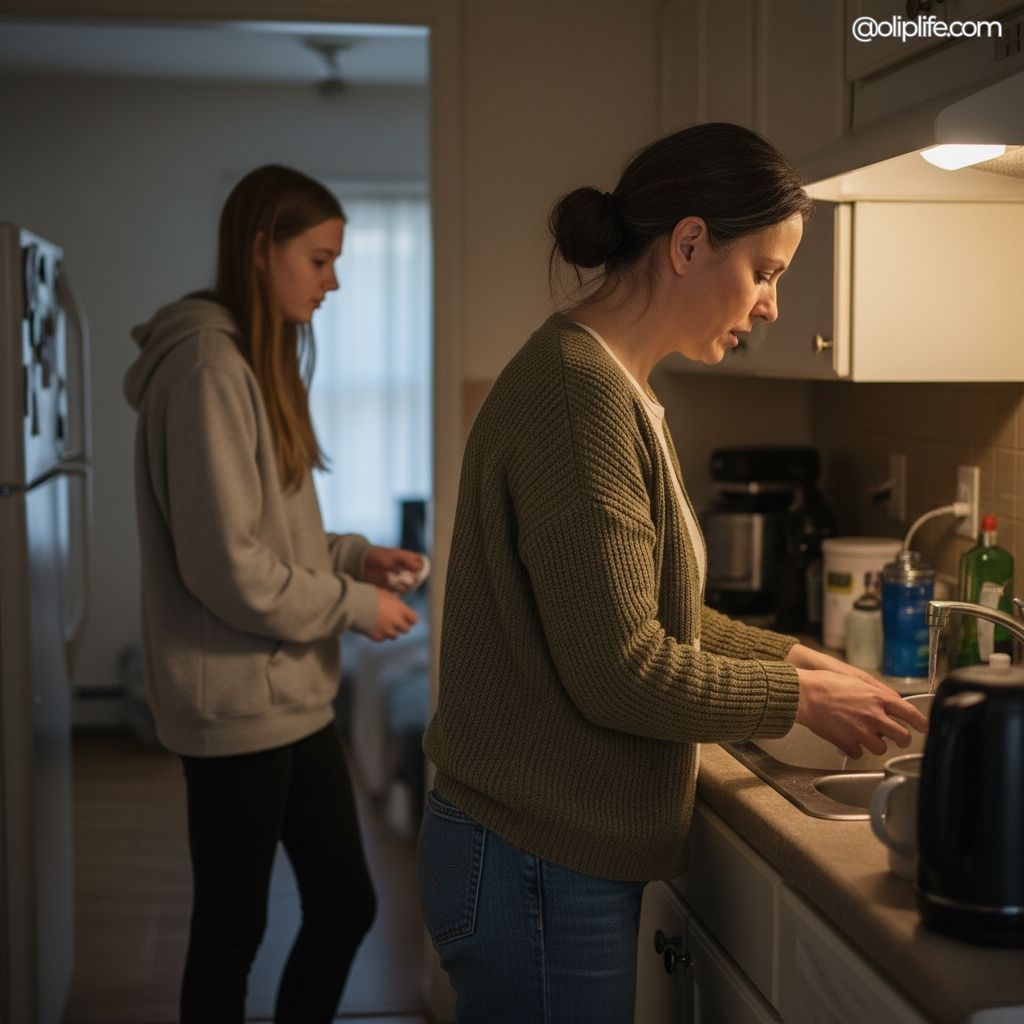
Behind me, Lucy was moving slowly, almost imperceptibly, the way she does when she senses the atmosphere has shifted but isn’t sure why. She was waiting for instructions I hadn’t given yet, trying to anticipate what would help without asking for clarification.
I felt it before I said it, that tightening in my chest that usually signals I’m about to trade precision for speed.
“Can you just move a little faster?” I said, sharper than I meant to be.
It wasn’t yelling. It wasn’t cruel. It was efficient in the way impatience often is. And it landed exactly as you would expect.
Lucy did what she always does when she feels she’s misstepped. She complied immediately. No protest. No eye contact. Just a quick adjustment, as if shrinking herself slightly might smooth things back into place.
The moment passed. The dishes got done. The evening continued.
And yet, something in the room didn’t recover.
The False Comfort of Closure
I noticed the distance later, when things should have felt settled.
Lucy went to her room without lingering. She answered questions politely but without warmth. She stayed close physically, but emotionally there was a subtle withdrawal that I’ve learned to recognize over the years.
I knew I owed her an apology.
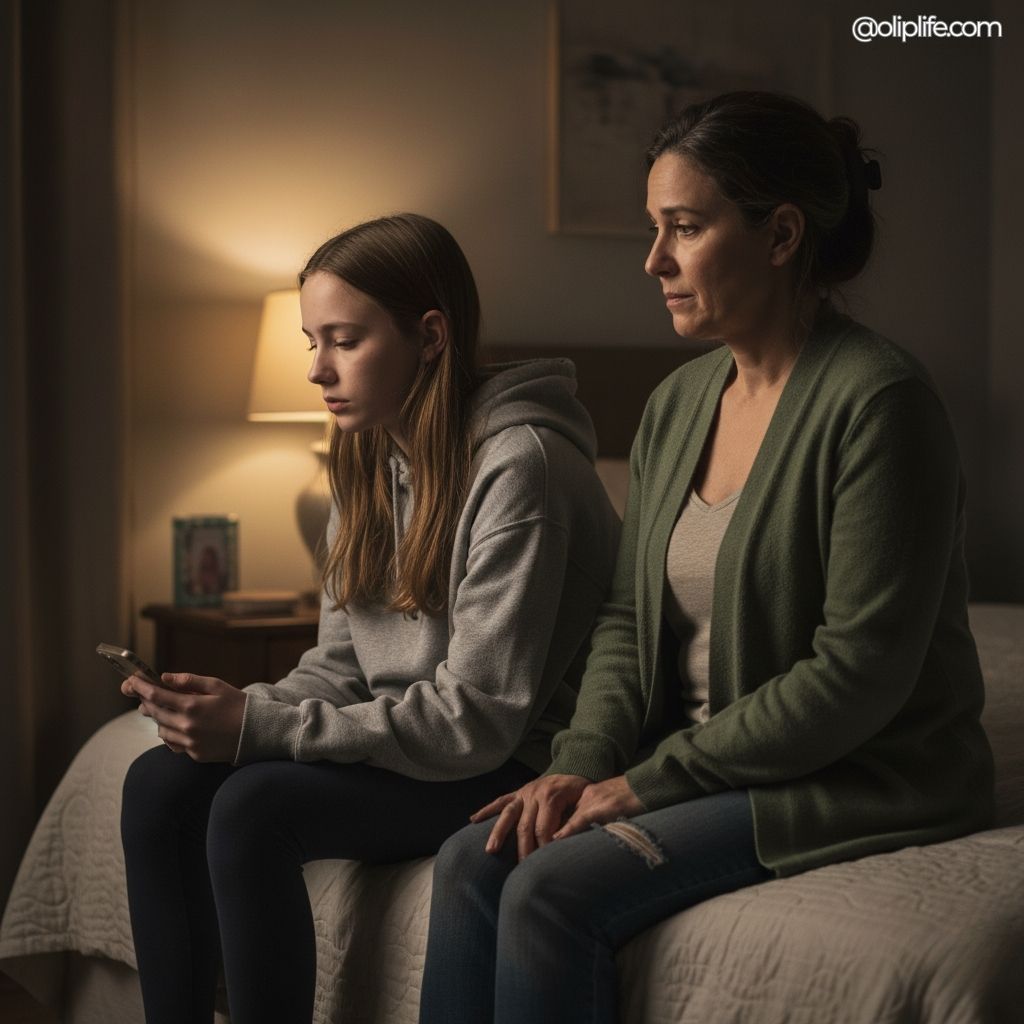
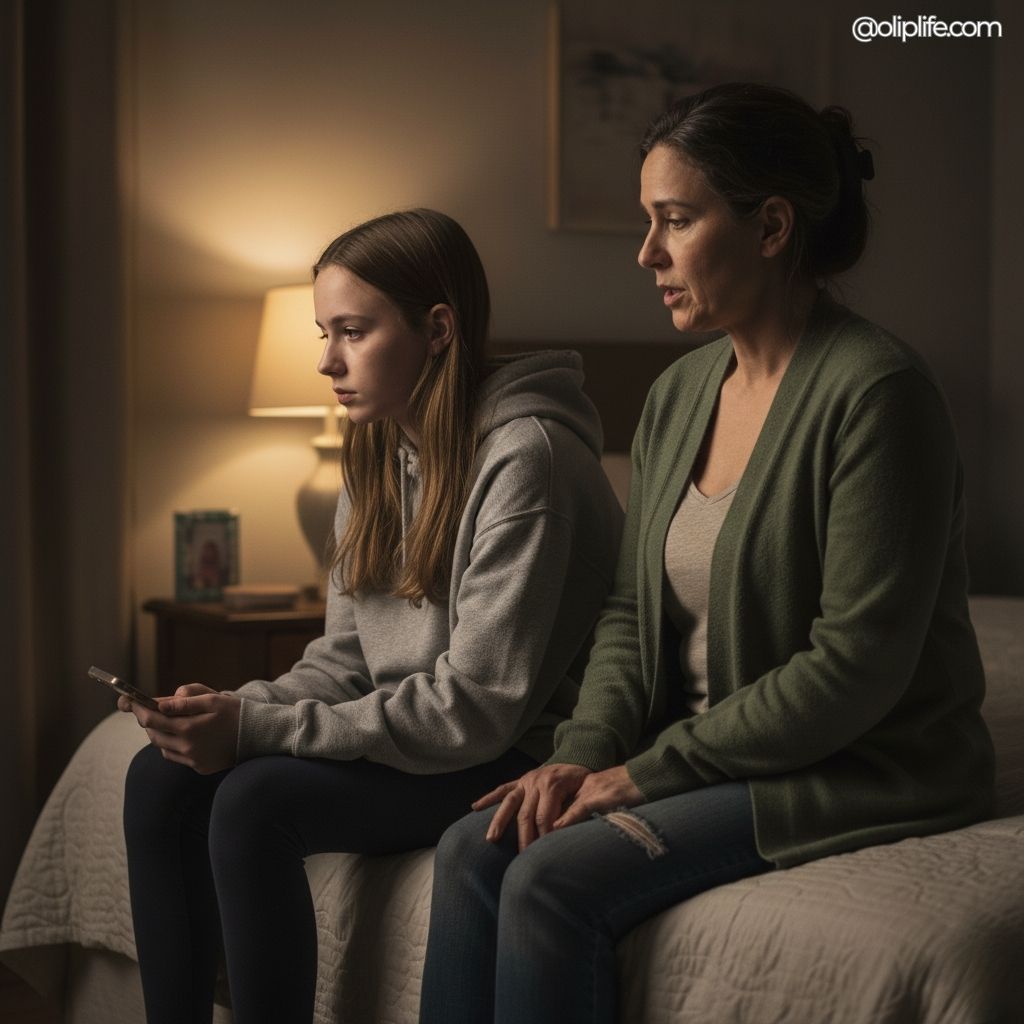
I found her a few minutes later, sitting on her bed, scrolling absentmindedly, not fully engaged in what she was looking at. I sat down and said the words I’ve said many times before, the ones that usually do what they’re supposed to do.
“I’m sorry for snapping at you earlier. That wasn’t fair.”
She nodded. She said, “It’s okay.”
But the space between us remained.
That was the moment I realized something important: sometimes an apology creates the appearance of closure without actually restoring connection.
It checks a box. It signals responsibility. It allows the adult to move forward.
But it doesn’t always meet the child where they are.
Why “I’m Sorry” Can Be Incomplete
Apologies are essential. I don’t want to minimize that. Children need to see adults take responsibility for their mistakes. They need language for accountability that doesn’t collapse into shame or defensiveness.
But apologies are fundamentally about the speaker.
They say, “I recognize what I did.”
They say, “I know I crossed a line.”
They say, “I’m willing to name my mistake.”
Repair, on the other hand, is about the relationship.
Repair asks a different set of questions.
What did this moment change for you?
What meaning did you make from it?
What do you need now to feel safe again?
When an apology isn’t enough, it’s often because the rupture didn’t just bruise feelings. It altered trust, even briefly.
And trust isn’t restored through words alone.
The Piece I Used to Skip
What I used to skip, without realizing it, was impact.
I would apologize for my behavior without slowing down long enough to understand how that behavior had been received. I assumed that naming my mistake automatically addressed the emotional aftermath.
That assumption made sense to me as an adult. It did not always make sense to my children.
From their perspective, the apology acknowledged what happened, but it didn’t necessarily address what it felt like.
Those are not the same thing.
Lucy didn’t need me to tell her I had spoken sharply. She already knew that. What she needed was confirmation that the sharpness hadn’t changed how I saw her.
Without that reassurance, the apology hovered above the wound instead of reaching it.
What Repair Required Instead
Later that night, after the house had gone quiet, I went back to her room.
This time, I didn’t start with an apology. I started with a question that felt riskier because it invited an answer I might not like.
“When I spoke to you earlier,” I said, “what did that feel like on your side?”
She didn’t respond right away. That pause told me everything.
Eventually, she said, “Like I was slowing you down.”
There it was.
Not anger. Not resentment. Interpretation.
She hadn’t just heard irritation. She had absorbed a story about herself.
That moment clarified something that has since reshaped how I think about repair: children are not just reacting to what we say. They are interpreting what it means about their place in the relationship.
Repair has to meet that interpretation head-on.
Repair as Reassurance, Not Explanation
My instinct in moments like this is to explain. To clarify. To contextualize.
“I was tired.”
“It wasn’t about you.”
“I didn’t mean it that way.”
Those explanations might have been true, but they would have missed the point.
Lucy didn’t need context. She needed reassurance.
So instead, I said, “I can see how it felt that way. I want you to know that even when I’m frustrated, you are not a problem I’m trying to get past.”
Her shoulders dropped slightly. Not dramatically. Just enough to signal that something had shifted.
That shift was repair beginning to do its work.
Why Repair Takes Time
One of the hardest things to accept as a parent is that repair doesn’t always happen on our timeline.
We apologize and expect immediate relief, both for the child and for ourselves. When that relief doesn’t arrive, we feel unsettled. We wonder if we did something wrong. We worry we’ve made things worse.
But repair often unfolds slowly.
Trust doesn’t snap back into place the way words can. It softens back over time, through consistency, through repeated experiences that contradict the fear created by the rupture.
In Lucy’s case, repair wasn’t complete after that conversation. It continued in the days that followed, through my tone, my patience, my willingness to notice when she hesitated.
The apology opened the door. The follow-through is what allowed her to walk back through it.
What Repair Looks Like in Practice
Over time, I’ve come to understand that repair is not a single act. It’s a pattern.
It looks like checking in after the moment has passed, not just addressing it in the heat of emotion.
It looks like naming impact, not just behavior.
It looks like adjusting future responses so the same rupture doesn’t happen again in the same way.
Most importantly, it looks like humility.
Repair requires us to accept that our children’s emotional experiences are valid even when they differ from our intentions.
That acceptance is often more powerful than any apology we can offer.
When Repair Involves Change
One of the clearest signals that an apology isn’t enough is repetition.
If the same rupture keeps happening, repair has to extend beyond reassurance into adjustment. That might mean changing expectations, slowing down transitions, or recognizing triggers before they escalate.
In my case, it meant paying closer attention to moments when efficiency was starting to override connection.
I began narrating my own stress instead of letting it leak out sideways. I named when I needed help or space instead of pushing through silently. I slowed myself down enough to remember that my children were not obstacles to manage but people to stay connected to.
That shift mattered.
The Risk of Skipping Repair
When repair is incomplete, children adapt.
They stop bringing certain things to us.
They adjust their behavior to avoid triggering frustration.
They internalize responsibility for our emotional states.
None of this happens dramatically. It happens quietly, through small calculations made again and again.
Repair interrupts that adaptation.
It tells children, “You don’t have to manage me.”
It tells them, “Our connection can bend without breaking.”
It tells them, “Your feelings won’t cost you safety here.”
Those messages linger long after the original moment fades.
What I Know Now
I no longer think of apologies as endings.
I think of them as invitations.
They invite conversation.
They invite curiosity.
They invite us to stay present long enough to understand what actually needs healing.
Sometimes that healing happens quickly. Sometimes it unfolds slowly. Sometimes it requires us to revisit the moment more than once.
All of that is normal.
Final Thoughts
Repair, when it goes beyond apology, becomes one of the most powerful forms of teaching available to parents.
It teaches children that relationships can recover.
It teaches them that harm can be acknowledged without blame.
It teaches them that connection is not fragile, even when it’s strained.
An apology says, “I was wrong.”
Repair says, “We are still safe with each other.”
When children experience that distinction consistently, they carry it with them into every relationship that follows.
And that, more than perfect behavior or flawless communication, is what helps them grow into adults who know how to repair what matters when words alone fall short.